
OutIn Nano Review: Is This Portable Espresso Maker Worth It?
This OutIn Nano review focuses on the question that matters most before buying: does self-heating convenience justify carrying a 670 g rechargeable espresso machine instead of a lighter manual brewer? The Nano combines an electric pump, built-in water heating, a 50–80 ml reservoir, ground-coffee and capsule compatibility, and a simple one-button workflow in a bottle-shaped body designed for travel.
Its strongest advantage is independence from a kettle. Add room-temperature water and the machine can heat it to a manufacturer-rated extraction temperature of up to 92°C / 198°F before brewing automatically. The tradeoff is battery demand: OutIn rates the Nano for up to five 50 ml cold-water brews per charge, while starting with hot water can stretch the battery to more than 200 extractions.
As an Amazon Associate I earn from qualifying purchases.
OutIn Nano Review: Quick Verdict
The OutIn Nano makes the most sense for travelers who want espresso-style coffee without carrying a kettle or manually pumping a brewer. Its self-heating design, automatic extraction, capsule compatibility, and compact 670 g format make it especially useful for road trips, hotels, offices, RVs, job sites, and campsites where access to hot water is unreliable.
It is less compelling for ultralight packing or for espresso hobbyists who want a large coffee dose and extensive control from the standard setup. The included ground-coffee basket holds 6–8 g, while OutIn's optional Nano Basket Plus expands that to 16–18 g. If you mainly want one-button convenience, however, the standard Nano remains one of the simplest established self-heating options in this category.
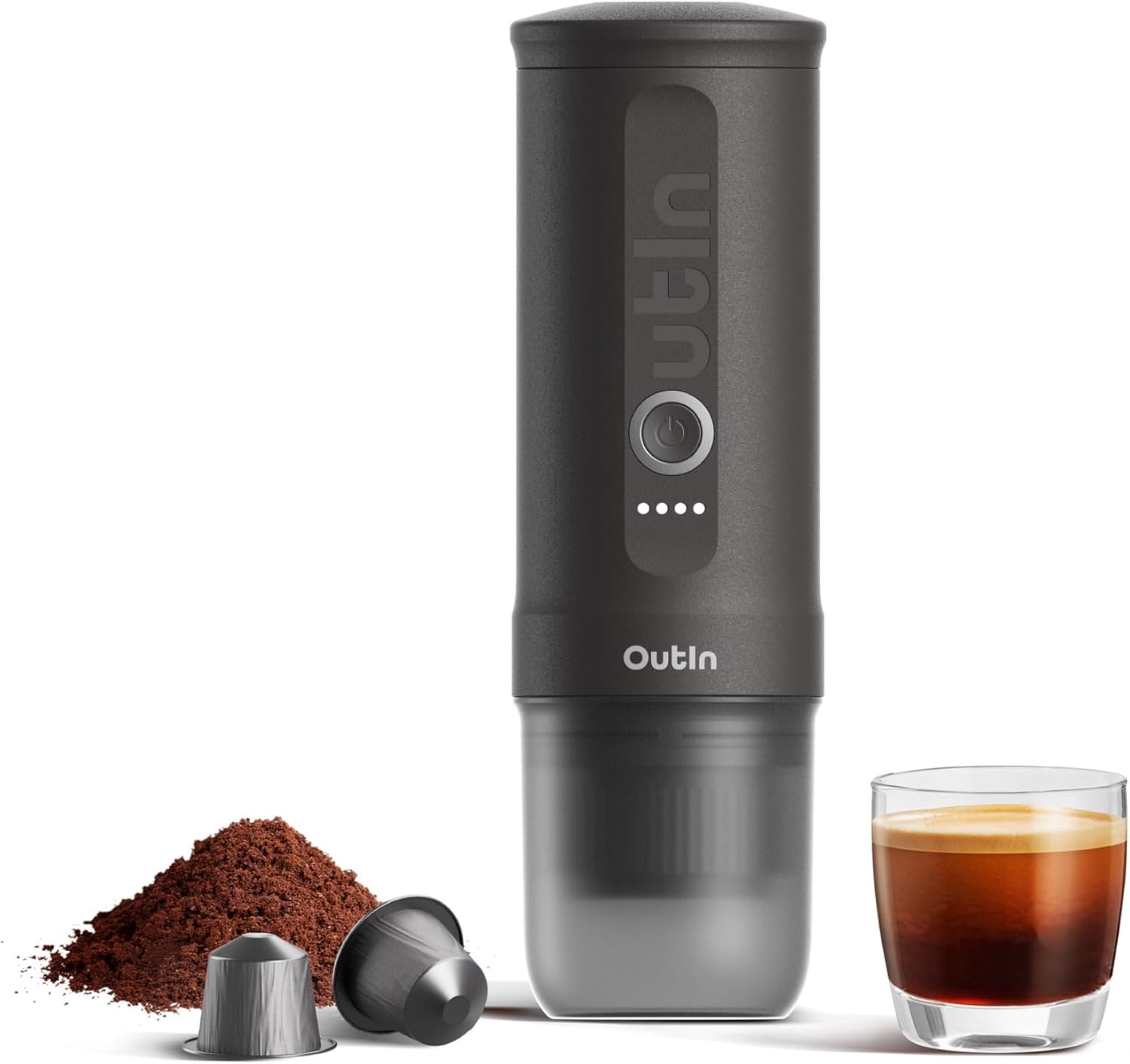
OutIn Nano Portable Espresso Machine
The Nano is a rechargeable portable electric espresso machine that handles both heating and extraction. Unlike a manual travel brewer, it does not require hand pumping, and unlike many compact espresso makers, it can start with room-temperature water.
*Manufacturer-reported figures. Heating speed and battery endurance can vary with starting water temperature, water volume, ambient temperature, battery condition, and usage.
Check OutIn Nano on AmazonHow the OutIn Nano Works
The Nano's appeal comes from removing several steps that make manual portable espresso inconvenient. You do not need to pump by hand, and you do not need a separate kettle when starting with cold water. The machine combines a rechargeable heater and electric pump in one unit.
That workflow is why the OutIn Nano portable espresso machine appeals to people who value convenience more than manual technique. The brewer still depends on coffee quality and preparation, but the machine takes over water heating and pumping.
Self-Heating Performance: The Nano's Biggest Advantage
Most manual portable espresso makers are only portable if you also have access to hot water. That is easy at home or at a campsite with a stove, but less convenient in a parked car, job site, hotel room, or outdoor location without a kettle. The Nano solves that problem by heating water internally.
OutIn lists a heating time of about 200 seconds and a maximum water temperature of 92°C / 198°F. In practical buying terms, that means the Nano is not a fast replacement for a countertop machine when you are standing next to a kettle. Its value appears when there is no kettle available.
Starting temperature also matters. Heating 50 ml of room-temperature water requires much less energy than heating 80 ml of very cold water outdoors. Therefore, the published heat-up and battery figures should be viewed as reference points rather than guaranteed results in every environment.
OutIn Nano Battery Life and Charging
Battery life is the most important limitation of any self-heating travel brewer because heating water consumes far more energy than pumping it through coffee. OutIn uses a three-cell 2500 mAh battery system and rates the Nano for up to five brews when each cycle starts with 50 ml of 25°C / 77°F water.
With hot water already in the reservoir, OutIn claims more than 200 extractions on a charge. That huge difference illustrates where the energy goes: the heater, not the pump, is the main battery load.
For a solo commuter or traveler making one or two drinks, the cold-water capacity can be enough for a day. For two people drinking several coffees or for cold-weather camping, battery planning matters more. If you expect repeated brewing away from power, either start with preheated water or keep charging access in mind.
The Nano uses USB charging and OutIn lists compatibility with 12V/24V car charging plus suitable USB power sources. That makes it much easier to live with on road trips than a proprietary charging system.
Using Ground Coffee in the OutIn Nano
The standard Nano ground-coffee basket holds about 6–8 g. That is a small dose compared with the 16–18 g baskets common in enthusiast espresso setups, so buyers should understand that the included configuration is designed around compactness and convenience rather than a café-style double shot.
OutIn recommends a fine grind. Because the standard basket is pressurized, it is more forgiving than a fully non-pressurized espresso basket, but grind size still affects flow and concentration. Coffee that is far too coarse can produce a fast, thin extraction, while an excessively fine dose can restrict flow.
For travel, the smaller basket has one advantage: it reduces coffee use and keeps preparation simple. The downside is that milk drinks and larger iced drinks may taste less coffee-forward unless you brew more than one serving or use the optional larger basket system.
OutIn Nano Capsules: The Easiest Travel Workflow
The Nano also works with Nespresso Original-size capsules and capsules of the same format. For many travelers, this is where the machine becomes easiest to justify. A capsule removes the need to carry a grinder, weigh coffee, manage loose grounds, or clean a wet coffee basket after every drink.
Capsules are especially practical in hotels, cars, offices, and RVs. They also make the Nano easier to share with someone who does not want to learn espresso preparation. The tradeoff is less control over coffee freshness, roast, dose, and grind.
If convenience is the priority, the capsule mode is one of the strongest reasons to choose this machine over a more technical manual espresso maker.
Is the OutIn Nano Basket Plus Worth Considering?
OutIn sells a separate Nano Basket Plus designed for 16–18 g of ground coffee. The accessory uses a larger stainless-steel basket and includes puck-preparation tools, allowing the Nano to move closer to a double-shot workflow.
This accessory changes the value proposition. The standard Nano is a convenience-first machine; Basket Plus appeals more to people who want fresh coffee, a larger dose, and more control. However, it also adds cost, extra parts, and more preparation to a product whose biggest strength is simplicity.
| Setup | Coffee dose | Preparation | Best fit |
|---|---|---|---|
| Standard ground basket | 6–8 g | Simple, pressurized workflow | Travel convenience |
| Compatible capsule | Pre-dosed | Fastest and cleanest | Hotels, cars, offices |
| Nano Basket Plus | 16–18 g | More puck preparation | Stronger ground-coffee focus |
Is the OutIn Nano Good for Travel and Camping?
At 670 g, the Nano is portable but not ultralight. A Wacaco Nanopresso weighs roughly half as much, and an AeroPress can also be lighter. The Nano earns its extra weight by carrying a heater, battery, and electric pump that those manual brewers do not include.
Road trips and cars
This is one of the strongest use cases. The bottle-like shape is easy to pack, self-heating removes the kettle problem, and vehicle-friendly charging gives the machine a logical place in a road-trip coffee kit.
Hotels and business travel
The capsule option is useful when you do not want to travel with a grinder or loose coffee. You can also use the hotel kettle if one is available, which preserves the Nano's battery for extraction.
Camping and outdoor use
The Nano is attractive for car camping and basecamp-style trips where 670 g is not a major penalty. Backpackers counting every ounce may prefer a lighter manual brewer, especially if a stove is already part of the cooking kit.
Air travel
OutIn instructs travelers to carry the Nano in carry-on luggage and not use it during flight. Because airline and battery rules can vary by carrier and route, check the airline's current lithium-battery policy before departure.
Cleanup and Daily Maintenance
Capsules keep cleanup simple because there are very few loose grounds to manage. With ground coffee, the basket needs to be emptied and rinsed after brewing, while coffee-contact parts should be kept free of residue.
The easiest routine is to rinse removable brewing parts soon after the drink is finished rather than allowing espresso residue to dry. Before packing the machine away, let wet components drain and dry so moisture is not trapped in a closed travel case.
The Nano is not a dishwasher-style appliance that you can ignore between trips. Small seals, baskets, adapters, and the brewing head benefit from regular inspection, especially if the machine spends time in a car, backpack, or camping bin.
OutIn Nano Pros and Cons
Pros
- Self-heats room-temperature water
- Automatic electric extraction with no hand pumping
- Works with ground coffee and compatible capsules
- Simple one-button concept
- USB and vehicle-friendly charging options
- 50–80 ml water range fits espresso-style travel drinks
- Optional 16–18 g Basket Plus expands the ground-coffee setup
Cons
- 670 g is much heavier than many manual brewers
- Heating cold water limits the number of drinks per charge
- Standard ground-coffee basket is only 6–8 g
- No multi-temperature control like newer premium competitors
- Basket Plus and other accessories raise total cost
- More electronics than a manual brewer means more dependence on charging
OutIn Nano Alternatives to Consider
The Nano remains attractive because it is established, simple, and lighter than several newer self-heating machines. Still, buyers should know where newer or manual alternatives make more sense. This is only a quick orientation; dedicated comparisons should handle model-versus-model decisions in depth.
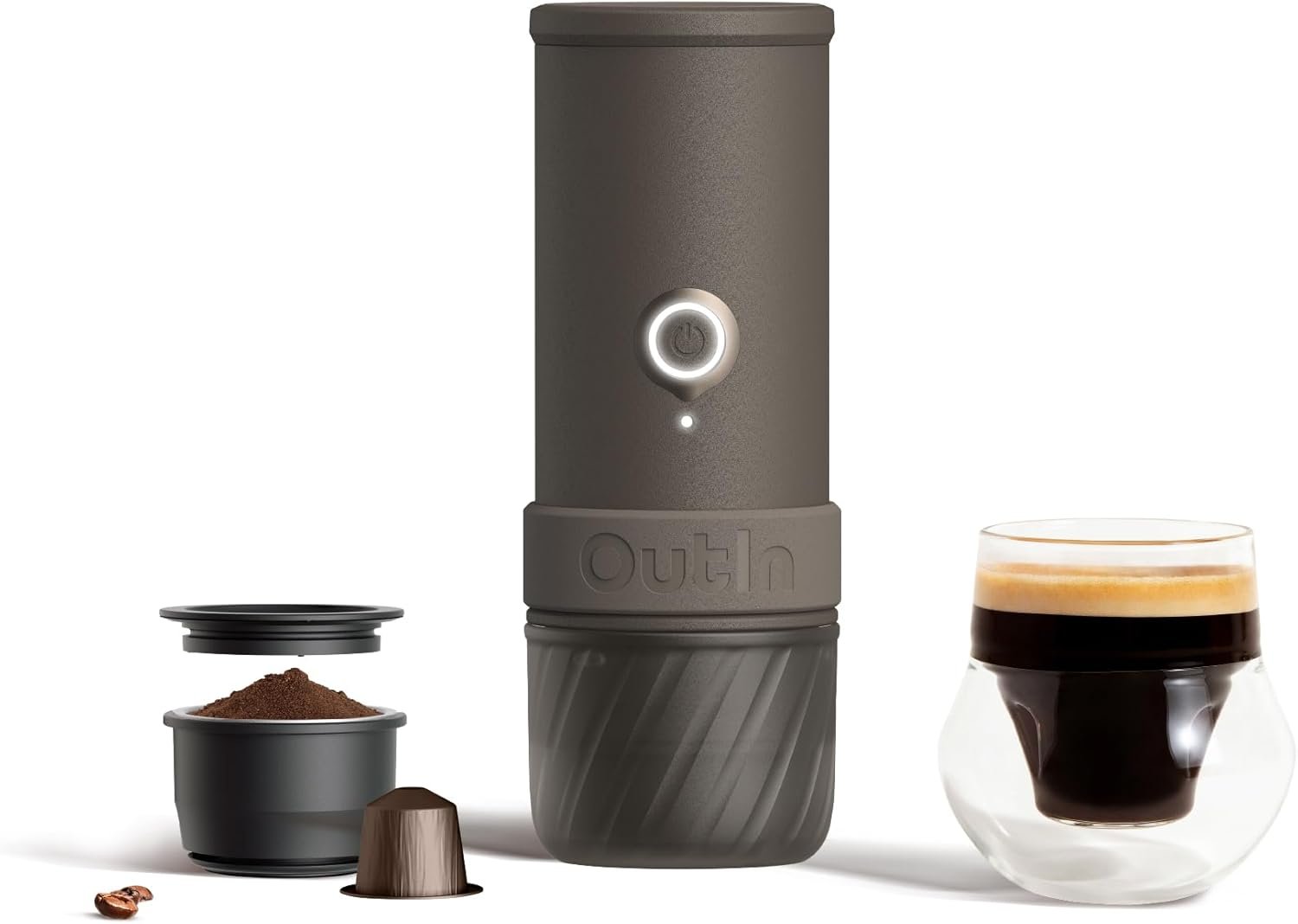
OutIn Mino
Choose Mino if you want OutIn's newer outdoor-focused design, faster manufacturer-rated heating, a larger battery system, and IP67 protection. Nano remains the simpler lower-cost entry point.
Check Mino on Amazon Read the OutIn Mino Review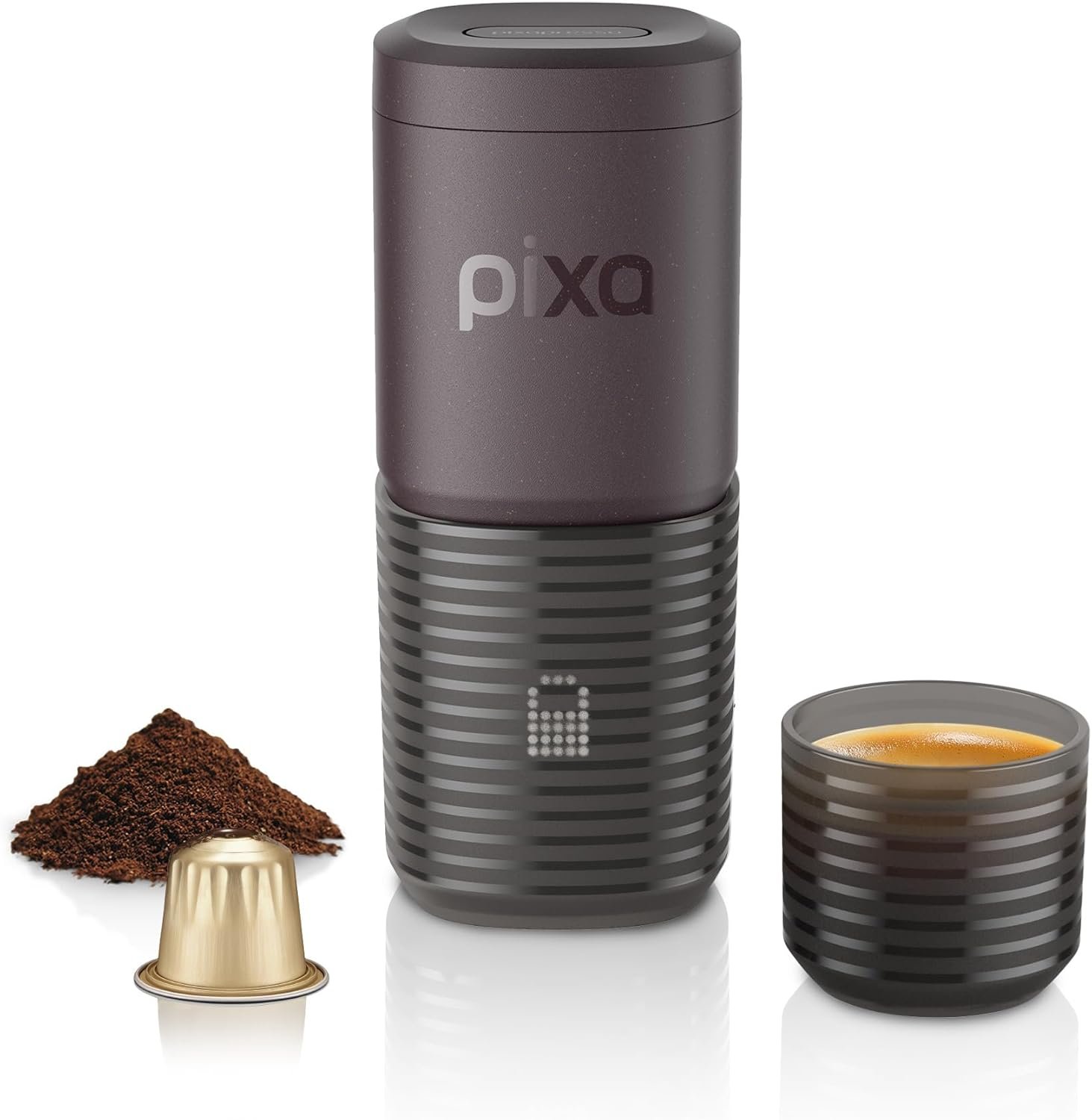
WACACO Pixapresso
Choose Pixapresso if brew control matters more than minimal complexity. It offers multiple temperature settings, pre-infusion, and a larger adjustable ground-coffee dose.
Check Pixapresso on Amazon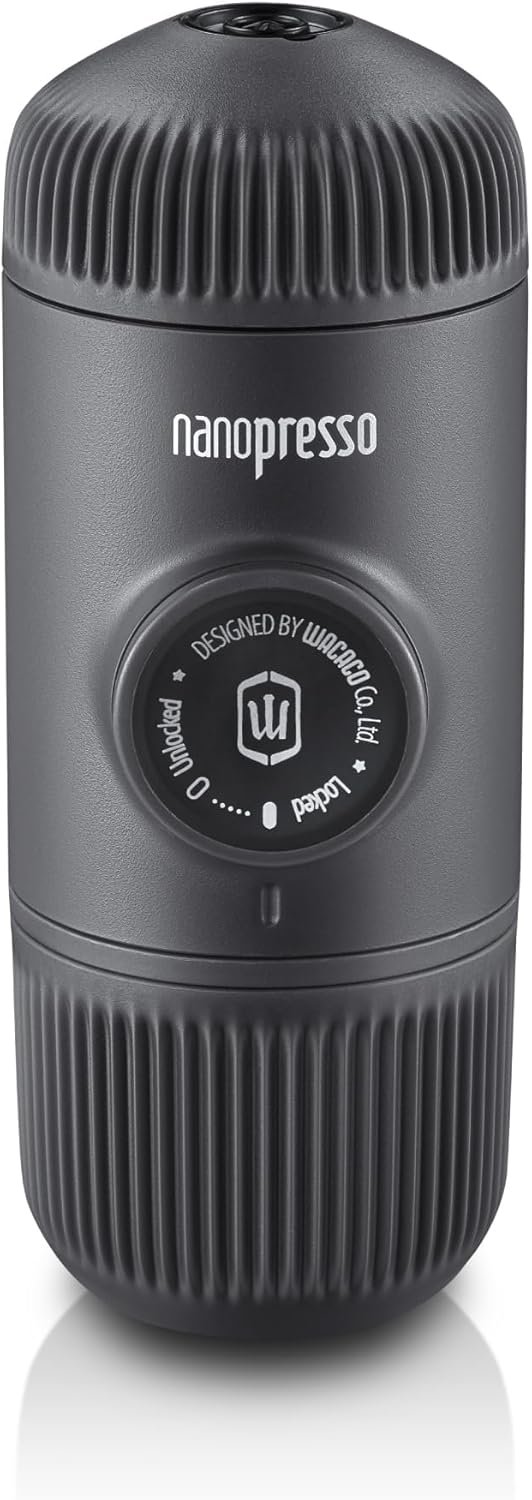
Wacaco Nanopresso
Choose Nanopresso when lower weight and mechanical simplicity matter more than built-in heating. It requires hot water and manual pumping but weighs far less.
Read the Nanopresso ReviewFor the broader electric category, see our best battery-powered portable espresso maker guide.
Who Should Buy the OutIn Nano?
Buy the Nano if...
- You regularly travel somewhere without dependable hot water.
- You want automatic extraction instead of manual pumping.
- You like the option to switch between capsules and ground coffee.
- You normally make one or two drinks at a time.
- You want a proven, straightforward self-heating format rather than many programmable settings.
- You travel by car, RV, hotel, office, or campsite where 670 g is reasonable.
Skip the Nano if...
- You are an ultralight backpacker and already carry a stove.
- You want a full 16–18 g ground-coffee dose without buying an accessory.
- You routinely make several cold-water brews before recharging.
- You want multiple brew temperatures, pre-infusion controls, or deeper programmability.
- You prefer a device with no battery or electronics to maintain.
For most buyers, the decision comes down to one feature: how valuable is built-in water heating to you? If it removes the biggest inconvenience from your travel coffee routine, the Nano's extra weight and battery limits are easier to justify.
Check OutIn Nano Price on AmazonRelated Portable Espresso Guides
OutIn Nano Review FAQ
Does the OutIn Nano heat its own water?
Yes. The Nano can start with room-temperature water and automatically heat it before extraction. OutIn lists a heat-up time of about 200 seconds and a maximum temperature of 92°C / 198°F under its test conditions.
How many shots can the OutIn Nano make per charge?
OutIn rates the battery for up to five brews when starting with 50 ml of 25°C / 77°F water. When you add already-hot water and use the battery mainly for extraction, the company lists more than 200 brews per charge. Real results can vary with temperature, water volume, battery age, and conditions.
What capsules work with the OutIn Nano?
The Nano is designed for Nespresso Original-size capsules and capsules with the same dimensions. It does not use every capsule format, so verify compatibility before buying a large supply.
Can the OutIn Nano use ground coffee?
Yes. The standard ground-coffee basket holds about 6–8 g and OutIn recommends a fine grind. An optional Nano Basket Plus increases ground-coffee capacity to 16–18 g.
Is the OutIn Nano a true double-shot machine?
The standard basket is too small for a conventional 16–18 g double-shot dose. OutIn's optional Basket Plus is designed specifically for 16–18 g of ground coffee and a larger double-shot-style workflow.
Is the OutIn Nano good for camping?
It is especially useful for car camping and campsites where built-in water heating matters. For ultralight backpacking, a lighter manual brewer can make more sense if you already carry a stove or another hot-water source.
Can you take the OutIn Nano on a plane?
OutIn instructs users to carry the Nano in carry-on luggage and not operate it during the flight. Always check the current battery rules of your airline before traveling.
Is the OutIn Nano worth buying?
It is worth considering when self-heating, automatic extraction, capsule compatibility, and travel convenience matter more than minimal weight or advanced espresso control. If you always have hot water available, a lighter manual brewer may offer better value.
Final Verdict
The OutIn Nano remains a strong portable electric espresso machine because it solves the most annoying part of travel espresso: finding hot water. Its 670 g body is heavier than manual brewers, but the built-in heater, electric pump, capsule support, USB charging, and straightforward workflow make the extra weight useful rather than arbitrary.
The standard 6–8 g ground-coffee basket and limited number of cold-water brews are the main constraints. Buyers who want larger espresso doses can add Basket Plus, while people who want greater temperature and pre-infusion control should look at newer premium alternatives.
For a traveler who wants to add cold water, insert coffee, press a button, and get a concentrated drink without a kettle, the Nano still occupies a practical middle ground between lightweight manual espresso makers and more complex high-end electric travel systems.
See OutIn Nano on Amazon