
Best Manual Portable Espresso Maker: 4 Top Picks for Travel
The best manual portable espresso maker depends on how much espresso control you want to carry. For shoppers comparing the best portable espresso maker options without batteries, manual models remain attractive because they combine travel-friendly size with direct control over brewing. A compact pressurized brewer such as the Wacaco Nanopresso is easier to use on the road, while the Wacaco Picopresso gives experienced users a larger basket and a more demanding barista-style workflow. Budget buyers can step down to the Minipresso GR, while STARESSO offers a compact alternative with its own hand-pumped design.
Among the best portable espresso makers for travelers who already have hot water, manual models can keep the setup compact and battery-free. All four models below work without a battery or wall outlet for extraction. However, none of them heats water, so a kettle, thermos, hotel hot-water source, or camp stove is still part of the setup. That tradeoff is exactly why a manual espresso machine can be lighter and mechanically simpler than a self-heating travel brewer.
As an Amazon Associate I earn from qualifying purchases.
Quick Answer: Which Manual Portable Espresso Maker Is Best?
Best overall for most travelers: Wacaco Nanopresso. Its 336 g body, 80 ml tank, integrated cup, and pressurized 8 g basket make it compact and relatively forgiving.
Best for espresso enthusiasts: Wacaco Picopresso. Choose it if you already own an espresso-capable grinder and want an 18 g, 52 mm basket with a naked portafilter.
Best budget Wacaco option: Minipresso GR. It is a simpler 8-bar, 8 g ground-coffee brewer that keeps the manual workflow inexpensive and easy to understand.
Best alternative to Wacaco: STARESSO Classic. It combines an 80 ml tank, 8–10 g basket, and compact 400 g body in a different hand-pumped format.
Best Manual Portable Espresso Makers Compared
A maximum pressure number is useful for describing the pump system, but it is not a direct espresso-quality score. Basket design, coffee dose, grind consistency, puck preparation, water temperature, and pumping technique matter more when comparing these machines.
| Model | Weight | Water | Coffee dose | Basket / workflow | Manufacturer pressure figure | Best for |
|---|---|---|---|---|---|---|
| Wacaco Nanopresso | 336 g / 11.9 oz | 80 ml | 8 g standard | Pressurized, integrated cup | 18 bar max | Most travelers |
| Wacaco Picopresso | 350 g / 12.35 oz | 80 ml | 18 g | 52 mm non-pressurized basket, naked portafilter | 18 bar max; 9–12 bar extraction guidance | Espresso control |
| Wacaco Minipresso GR | 360 g / 12.7 oz | 70 ml | 8 g | Pressurized, integrated cup | 8 bar | Budget simplicity |
| STARESSO Classic | 400 g / 0.88 lb | 80 ml | 8–10 g | Manual hand-pumped system | 15–20 bar working-pressure range | Compact alternative |
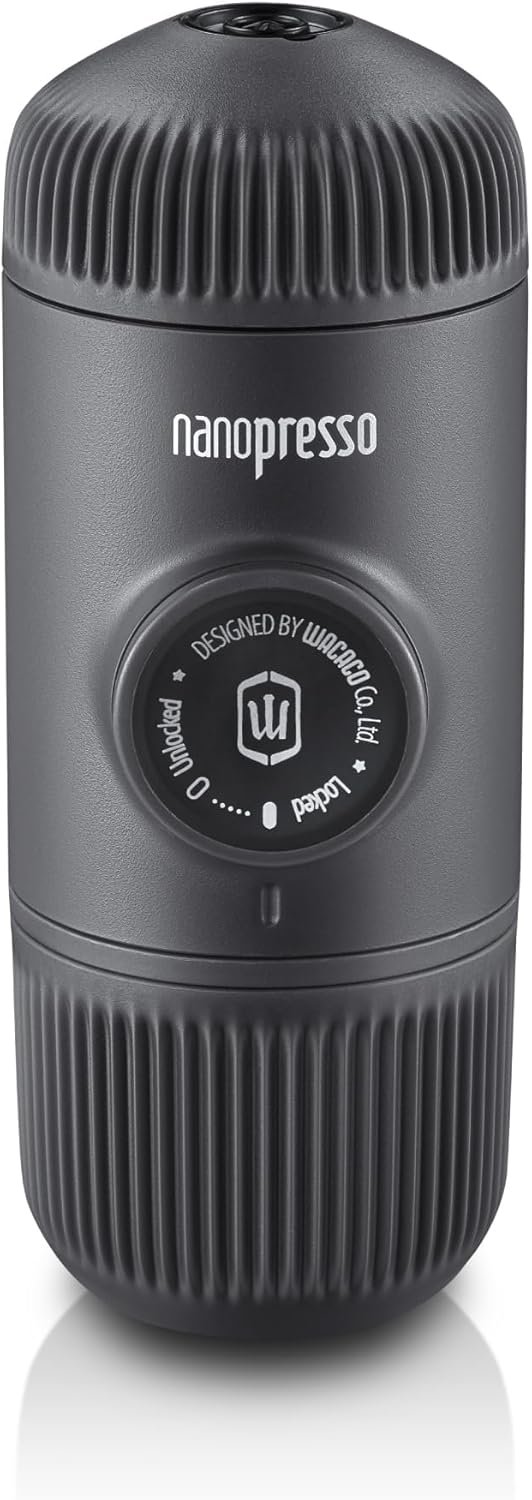
1. Wacaco Nanopresso
The Nanopresso is the easiest all-around recommendation when portability matters more than chasing the highest possible espresso-quality ceiling. Its standard pressurized basket holds 8 g of ground coffee, which is smaller than Picopresso's 18 g basket but also more forgiving of minor grind and preparation differences.
In addition, the integrated cup keeps the travel kit simple. Wacaco lists the brewer at 336 g with an 80 ml water tank and an 18-bar maximum pressure rating. It does not heat water, so the main question is whether you already have a reliable hot-water source.
Choose Nanopresso if you want a small hand espresso maker for travel, camping, office use, or road trips and prefer a simpler workflow. On the other hand, choose Picopresso if you already own a capable grinder and want more direct control over puck preparation and extraction.

2. Wacaco Picopresso
Picopresso is the strongest fit for buyers searching for a manual espresso machine that behaves more like a compact barista tool. It uses a 52 mm stainless-steel basket, an 18 g coffee dose, and a naked portafilter. As a result, grind quality, distribution, tamping, and pumping technique have a much larger effect on the shot.
Wacaco lists Picopresso at 350 g with an 80 ml tank and an 18-bar maximum pressure rating. More importantly, its own brewing guidance calls for an 8-second preinfusion and roughly 9–12 bar during extraction. Therefore, the 18-bar headline number should not be treated as the target pressure for the entire shot.
Choose Picopresso if shot quality and control matter more than simplicity and you are willing to carry an espresso-capable burr grinder. However, if you want a more forgiving travel workflow, Nanopresso is usually the better fit.
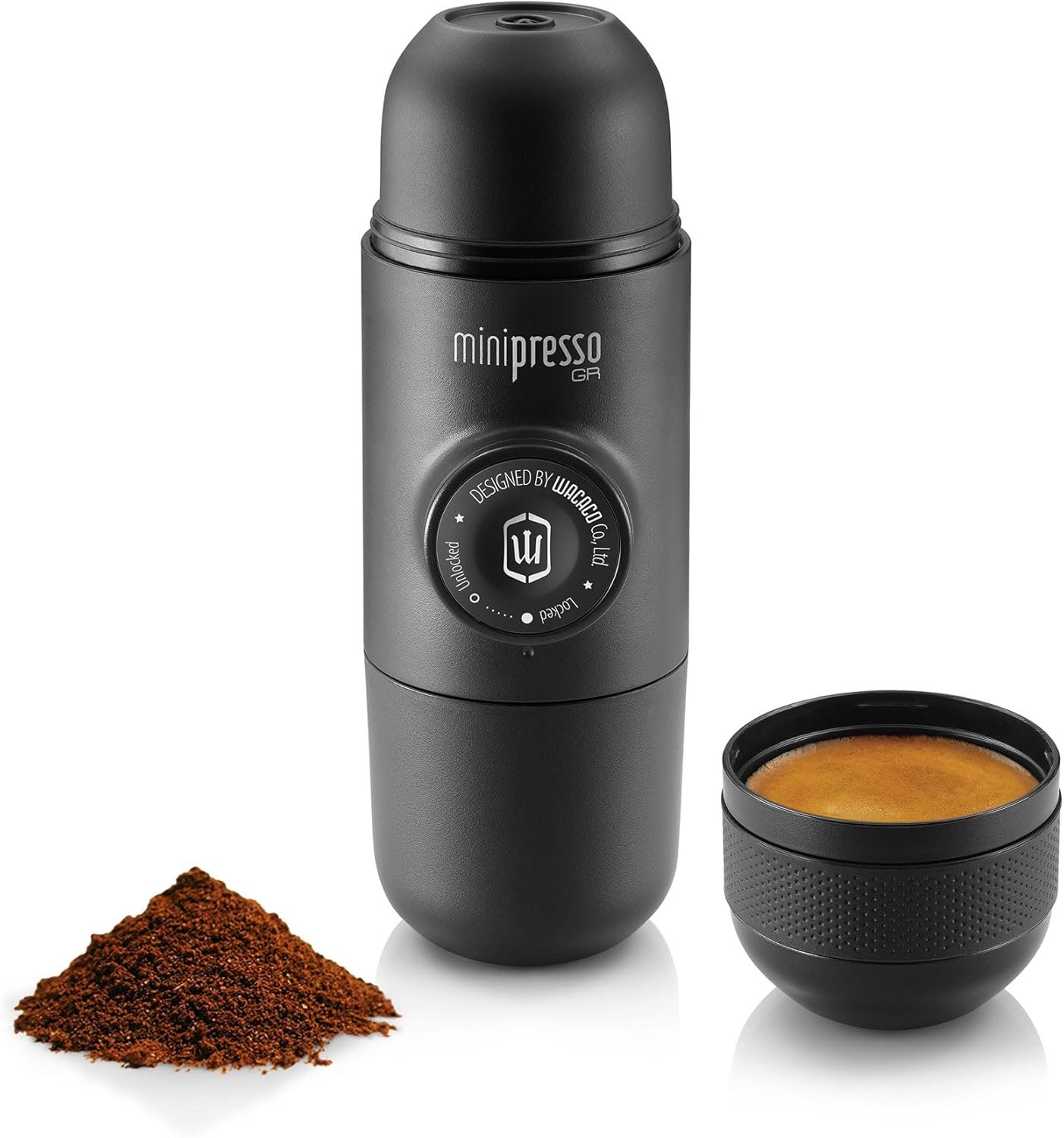
3. Wacaco Minipresso GR
The Minipresso GR is a straightforward entry point for buyers who want ground-coffee espresso without paying for the more advanced Picopresso workflow. Wacaco lists an 8 g basket, 70 ml water tank, 360 g body weight, and an 8-bar pressure figure. The pressurized design also makes it less demanding than a naked-portafilter brewer.
Its biggest limitation is capacity. The standard setup is intended for a small espresso serving, and you still need hot water from a separate source. Nevertheless, for occasional travel or a low-cost backup brewer, the GR keeps the system compact and easy to understand.
Choose Minipresso GR if budget and simplicity are more important than a larger dose or advanced puck preparation. If you are comparing Minipresso versions, the dedicated NS vs GR guide explains the difference between capsule convenience and ground-coffee flexibility.
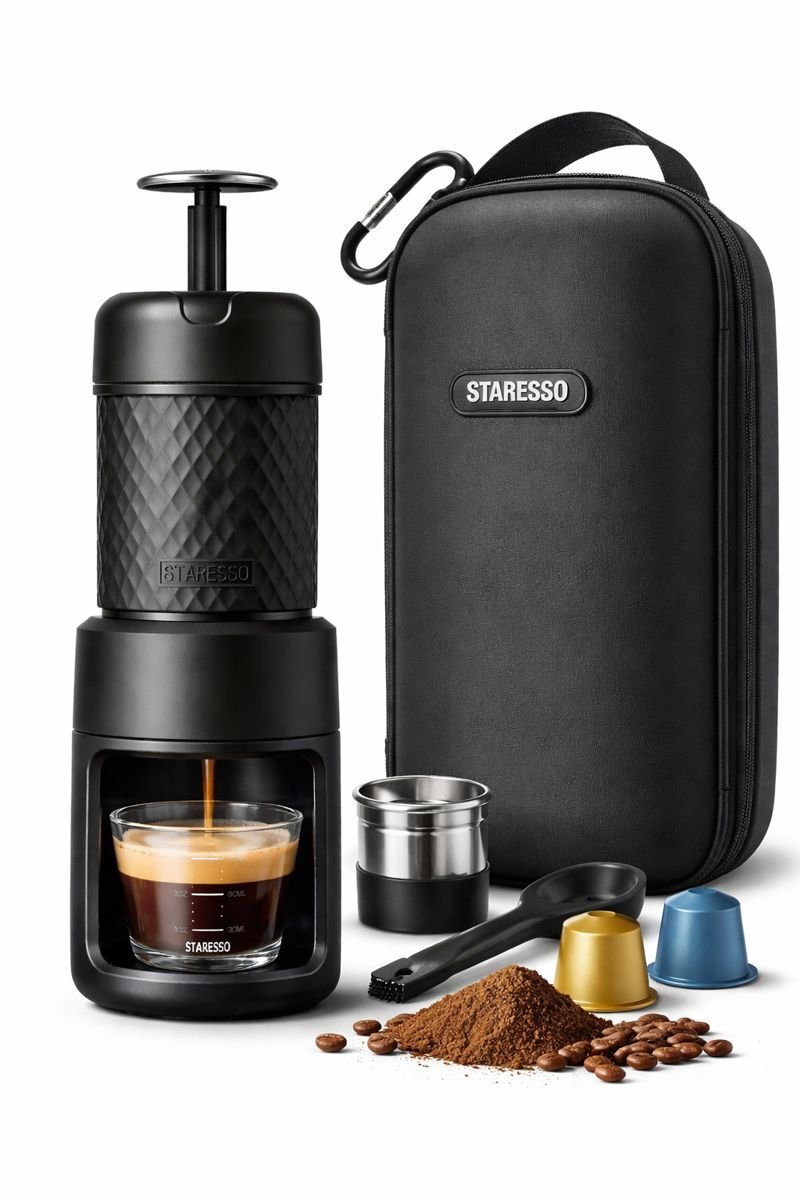
4. STARESSO Classic Portable Espresso Maker
STARESSO is worth considering if you want a manual portable espresso maker outside the Wacaco lineup. The manufacturer lists the Classic at 400 g with an 80 ml water capacity, an 8–10 g basket, and a 15–20 bar working-pressure range.
Compared with Picopresso, the STARESSO keeps the dose smaller and the overall workflow more travel-oriented. Meanwhile, its cylindrical hand-pumped format gives buyers another option when they do not want to commit to Wacaco's accessory ecosystem.
Choose STARESSO if you want a compact alternative with a different pump layout and a small travel footprint. For a deeper look at the model, use our dedicated STARESSO review before buying.
How to Choose the Best Manual Espresso Machine for Travel
If your search is for the best manual espresso maker, best travel espresso maker, or a compact hand espresso maker, start with the complete brewing setup rather than pressure alone. The brewer, grinder, hot-water source, dose, cleanup, and number of drinks you make in a row all affect portability.
1. Start with the basket, not the advertised pressure
A pressure rating alone does not tell you how forgiving a brewer will be. Nanopresso and Minipresso GR use pressurized systems that are easier to live with when grind consistency is imperfect. Picopresso, by contrast, uses a non-pressurized 52 mm basket that rewards better grinding and puck preparation.
2. Decide how much coffee you want in one shot
Picopresso's 18 g basket is the clear choice if you want a full double-shot dose. Nanopresso and Minipresso GR use 8 g standard baskets, while STARESSO lists an 8–10 g range. Therefore, a small brewer can be highly portable without necessarily matching the coffee dose you use at home.
3. Count the grinder as part of the travel kit
For Picopresso, the grinder matters almost as much as the brewer. An ultra-fine, consistent grind is central to the non-pressurized workflow. Nanopresso and Minipresso GR are more forgiving, although fresh coffee and a burr grinder still improve repeatability. Our portable coffee grinding guide explains how grinder choice changes the travel setup.
4. Make sure hot water is realistic
None of these four brewers heats water. That is a minor issue if you already carry a camp stove, electric kettle, or thermos. In contrast, it can be a deal-breaker in a car or hotel where hot water is uncertain. In that situation, compare the best battery-powered portable espresso makers instead.
5. Think about cleanup before choosing the most advanced brewer
More espresso control usually means more preparation and cleanup. Picopresso gives you the most feedback and adjustment, but its basket and puck-prep routine require more attention. Nanopresso or Minipresso GR can be a better travel espresso maker when speed and simplicity matter more than dialing in every shot.
Which Manual Portable Espresso Maker Fits Your Travel Style?
Camping & backpacking
Nanopresso is the most balanced choice when you already carry a stove or kettle. It stays compact and does not demand the same grinder precision as Picopresso.
Hotel & business travel
Nanopresso or Minipresso GR works well when hot water is easy to obtain and you want a compact setup with straightforward cleanup.
Espresso-focused travel
Picopresso is the clear pick if you are willing to carry a capable grinder, distribute and tamp carefully, and spend more time on the shot.
Budget or backup brewer
Minipresso GR makes sense as a simple ground-coffee option with no battery, while STARESSO offers another compact manual format.
Manual Portable Espresso Maker Pros and Cons
Pros
- No battery to charge for extraction
- Usually lighter than self-heating machines
- Compact enough for travel bags and camping kits
- Ground coffee gives you control over beans and roast
- Fewer electronics and charging requirements
Cons
- Hot water must come from another source
- Manual pumping takes effort
- Most models brew one small serving at a time
- A grinder adds weight and cost
- Advanced models can have a real learning curve
Manual Espresso Maker vs AeroPress
An AeroPress and a manual portable espresso maker solve different problems. AeroPress uses immersion plus manual pressure and is designed around flexible coffee brewing rather than conventional espresso extraction. As a result, it is generally easier to use with a wider range of grind sizes and recipes.
A manual espresso maker is the better fit when your priority is a short, concentrated espresso-style shot and you are willing to manage grind, dose, hot water, and pressure. If you are deciding between the two categories, see our portable espresso maker vs AeroPress comparison.
Related Portable Espresso Guides
Manual Portable Espresso Maker FAQ
What is the best manual portable espresso maker?
For most travelers, Nanopresso offers the best balance of size, simplicity, and a forgiving pressurized basket. Picopresso is better for experienced users who want an 18 g dose, a 52 mm basket, and greater espresso control.
What is the best manual espresso machine for serious espresso?
Among the compact travel models in this guide, Picopresso has the highest espresso-control ceiling because it uses a non-pressurized 52 mm basket and an 18 g dose. However, it also requires the most capable grinder and the most careful puck preparation.
Do manual portable espresso makers heat water?
The four models covered here do not. You must add hot water from a kettle, thermos, hotel source, or camp stove. If built-in heating is essential, choose a battery-powered self-heating model instead.
Is 18 bar better than 8 bar for a portable espresso maker?
Not automatically. Maximum pump pressure is not an espresso-quality score. Basket design, grind consistency, dose, water temperature, flow resistance, and technique all influence extraction.
What is the best travel espresso maker for beginners?
Nanopresso is easier to recommend than Picopresso for beginners because its pressurized basket is more forgiving. Minipresso GR is another simple option if budget matters more than capacity or advanced control.
Is a hand espresso maker good for camping?
Yes, especially when your camping setup already includes a safe way to heat water. Manual brewers avoid battery management and can be lighter than self-heating electric machines.
Do I need an espresso grinder for a portable manual espresso maker?
Picopresso benefits strongly from a true espresso-capable burr grinder because its non-pressurized basket depends on precise grind resistance. Pressurized models such as Nanopresso and Minipresso GR are more forgiving, but consistent fresh grinding still helps.
Final Verdict
Nanopresso is the best manual portable espresso maker for most travelers because it balances compact size, a forgiving workflow, and an integrated cup. Picopresso is the better choice when espresso control matters more than simplicity. Minipresso GR is the budget pick, while STARESSO remains a useful alternative for buyers who prefer a different hand-pumped format.
Whichever model you choose, plan the complete travel setup—not just the brewer. Hot water, coffee dose, grinder quality, cleanup, and the number of drinks you make in a row will affect daily convenience more than the largest pressure number on the box.