
Best Battery-Powered Portable Espresso Makers: Rechargeable & Self-Heating Picks
If you are looking for the best rechargeable espresso machine for travel, the biggest difference is no longer simply “manual vs electric.” Today’s strongest battery-powered portable espresso makers can heat cold water, extract automatically, work with ground coffee or capsules, and recharge by USB-C or vehicle-friendly power.
This guide compares four strong U.S.-market options: OutIn Mino, WACACO Pixapresso, OutIn Nano, and CONQUECO PCM020. The right choice depends on whether you care most about fast heating, brew control, battery endurance, outdoor durability, or value.
As an Amazon Associate I earn from qualifying purchases.
Quick Answer: Which Rechargeable Espresso Machine Is Best?
Best overall for most travelers: OutIn Mino. It combines a 149-second manufacturer-rated heat-up, a 3×3000mAh battery, fast USB-C charging, ground-coffee and Original-line capsule support, and an IP67-rated adventure-focused design.
Best for brew control: WACACO Pixapresso. Its three temperature settings, 8–16 g adjustable basket, pre-infusion option, 120 ml tank, and touchscreen-style interface give it the most configurable workflow here.
Best value / simpler proven format: OutIn Nano. It remains lighter than the other fully self-heating options in this roundup and supports both ground coffee and capsules.
Best for long road trips and battery capacity: CONQUECO PCM020. Its 13,500mAh battery and 12V/24V charging support make it especially relevant for cars, RVs, trucks, and camping.
Best Portable Electric Espresso Makers: Quick Picks
Fast heat-up, fast charging, IP67 protection, strong battery, and a compact outdoor-focused design.
Check Mino on Amazon →Three temperatures, pre-infusion, 8–16 g basket, large 120 ml tank, and multiple drink modes.
Check Pixapresso on Amazon →A mature self-heating design with ground-coffee and capsule support and up to five cold-water brews per charge.
Check Nano on Amazon →Large 13,500mAh battery plus 12V/24V vehicle-friendly charging and ground/capsule compatibility.
Check CONQUECO on Amazon →Rechargeable Portable Espresso Machine Comparison
Heating times, cup counts, pressure ratings, and battery figures below are manufacturer-reported and can vary with water temperature, water volume, ambient conditions, coffee preparation, and battery age.
| Model | Heat-up from room-temp water | Battery | Cold-water brews / charge | Water capacity | Ground coffee | Capsules | Weight | Published max pressure |
|---|---|---|---|---|---|---|---|---|
| OutIn Mino | 149 sec* | 3×3000mAh | Up to 6* | 70 ml | Up to 12 g | Original line | 685 g | 22 bar |
| WACACO Pixapresso | ~180 sec* | 3000mAh 3S | Up to 5 espresso* | 120 ml | 8–16 g | NS / Original line | 755 g | 20 bar |
| OutIn Nano | 200 sec* | 2500mAh 3S | Up to 5* | 80 ml | Yes | Original line | 670 g | 20 bar |
| CONQUECO PCM020 | ~3 min* | 13,500mAh | Up to 8×40 ml* | Not consistently stated | Yes | Original-compatible | ~948 g* | 18 bar* |
*Manufacturer-reported data. CONQUECO’s product information contains inconsistent figures for cup count and pressure in different sections, so confirm the latest listing before purchase.
What to Compare Before Buying a Battery-Powered Espresso Maker
A higher “bar” number does not automatically mean better espresso. Maximum pump pressure is only one specification. For a travel machine, heating speed, temperature control, battery endurance, coffee compatibility, charging, packed size, cleanup, and brew control are usually more useful buying criteria.
Self-heating performance
Starting with room-temperature water is one of the most useful features because it separates a truly self-heating travel machine from a manual brewer that still needs a kettle or stove.
Battery & charging
Cold-water heating uses far more energy than extraction with preheated water, so both battery capacity and the manufacturer-stated number of cold-water brews matter.
Real travel fit
Weight, water capacity, capsule support, vehicle charging, ruggedness, and cleanup can matter more on a trip than an extra few bars of advertised pump pressure.
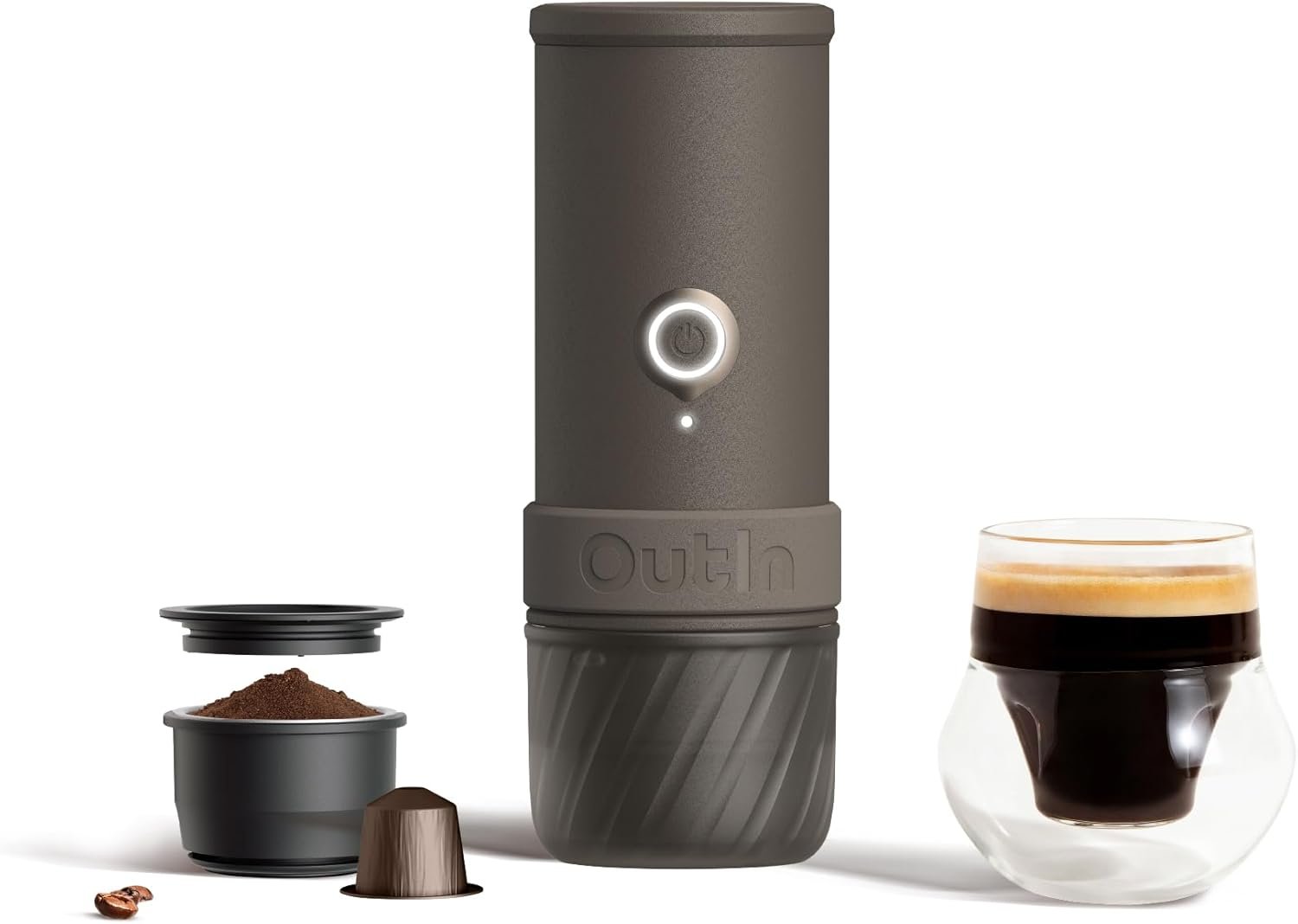
1. OutIn Mino Portable Electric Espresso Machine
OutIn Mino is the strongest all-around travel pick in this roundup because it balances heating speed, battery endurance, charging speed, outdoor durability, and compact dimensions without requiring a kettle.
OutIn says Mino heats 50 ml of room-temperature water to 93.3°C / 199.9°F in 149 seconds and can perform up to six cold-water extractions per charge. Its USB-C system is also unusually travel-friendly: the manufacturer lists 20% to 80% charging in 45 minutes and a full charge in about 90 minutes.
It supports both ground coffee and Nespresso Original-line pods. The 70 ml tank and 12 g ground-coffee limit make it more focused on espresso-sized drinks than Pixapresso, but that is a reasonable tradeoff for people who care more about fast, compact brewing than large drink volume.
Who should buy the OutIn Mino?
Choose Mino if your priority is a rechargeable portable espresso machine for camping, hiking, road trips, or frequent travel where ruggedness and fast recharging matter. OutIn specifically positions it for outdoor environments, including high-altitude use, and publishes an IP67 splash/water/dust resistance rating.
Pros
- Fastest manufacturer-rated heating in this group
- Fast USB-C charging
- Up to six cold-water brews per charge
- Ground coffee + Original-line capsules
- IP67-rated outdoor protection
Cons
- 70 ml tank is smaller than Pixapresso
- 12 g grounds capacity is not a full 16–18 g double-shot basket
- Manufacturer performance figures can vary in real conditions
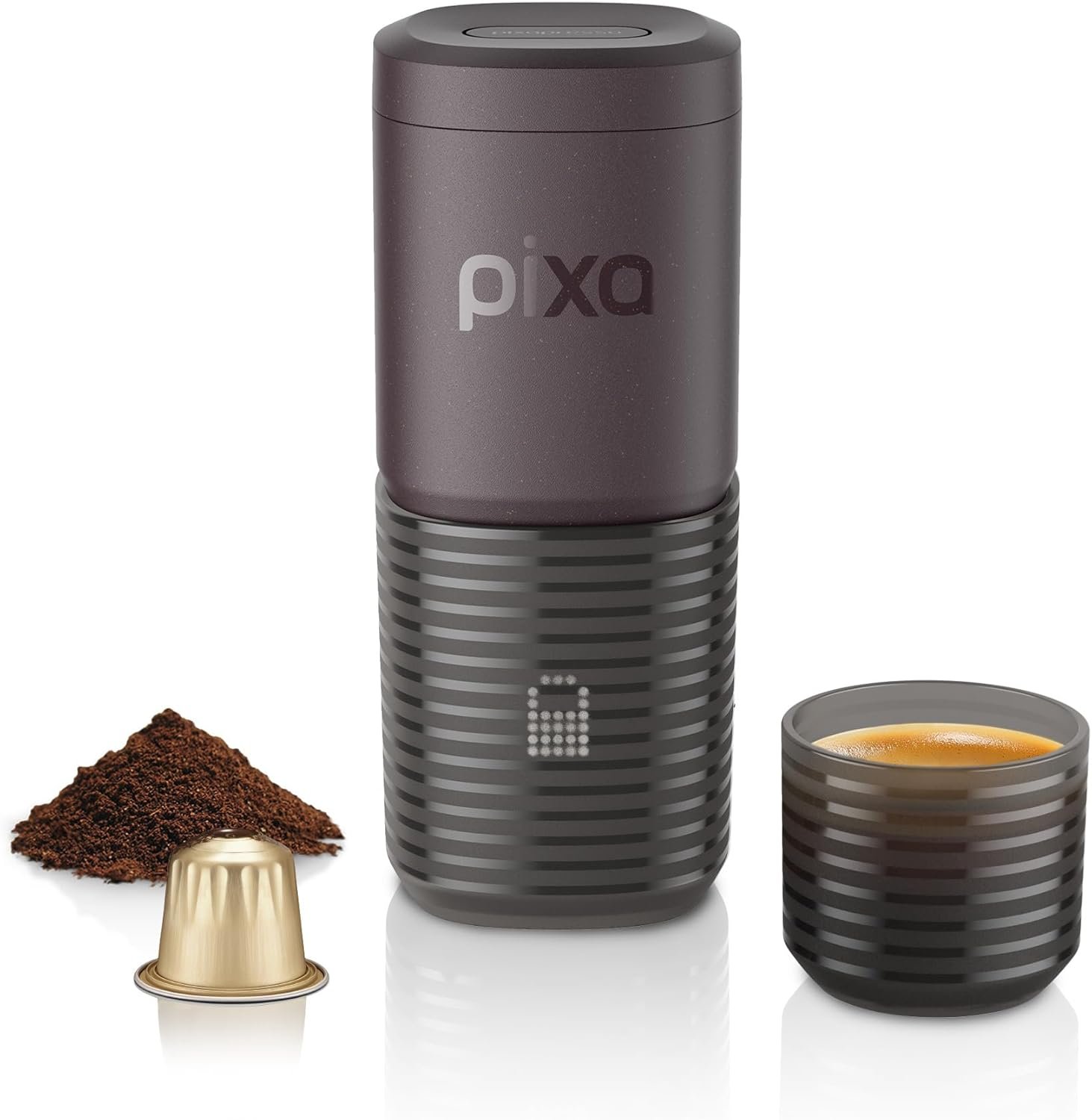
2. WACACO Pixapresso Electric Portable Espresso Maker
Pixapresso is the most configurable machine here. WACACO gives it three preset brew temperatures, adjustable 8–16 g ground-coffee capacity, pre-infusion control, four drink styles, a 120 ml water tank, and compatibility with both ground coffee and NS / Nespresso Original-compatible capsules.
The Pixapresso is particularly interesting for coffee drinkers who want more control than a one-button travel brewer normally provides. The adjustable basket can handle 8 g for a shorter shot or up to 16 g for a fuller double, and the interface lets you choose temperature and pre-infusion rather than accepting one fixed brewing profile.
That flexibility comes with slightly more weight and a slower charge than Mino. But if you move between light and dark roasts, use both capsules and fresh coffee, or want a larger water tank for lungo-style drinks, Pixapresso offers a more versatile coffee system.
Who should buy the WACACO Pixapresso?
Choose Pixapresso if you want the best rechargeable espresso machine here for brew customization, not simply the fastest heat-up. It is also the strongest fit for users who want a larger coffee dose and more than one brew-temperature setting.
Pros
- 8–16 g adjustable basket
- Three temperature settings
- Pre-infusion option
- 120 ml water tank
- Ground coffee + Original-compatible capsules
Cons
- Heavier than Mino and Nano
- Manufacturer lists about 2.5 hours for charging
- More settings mean more complexity than a basic one-button brewer
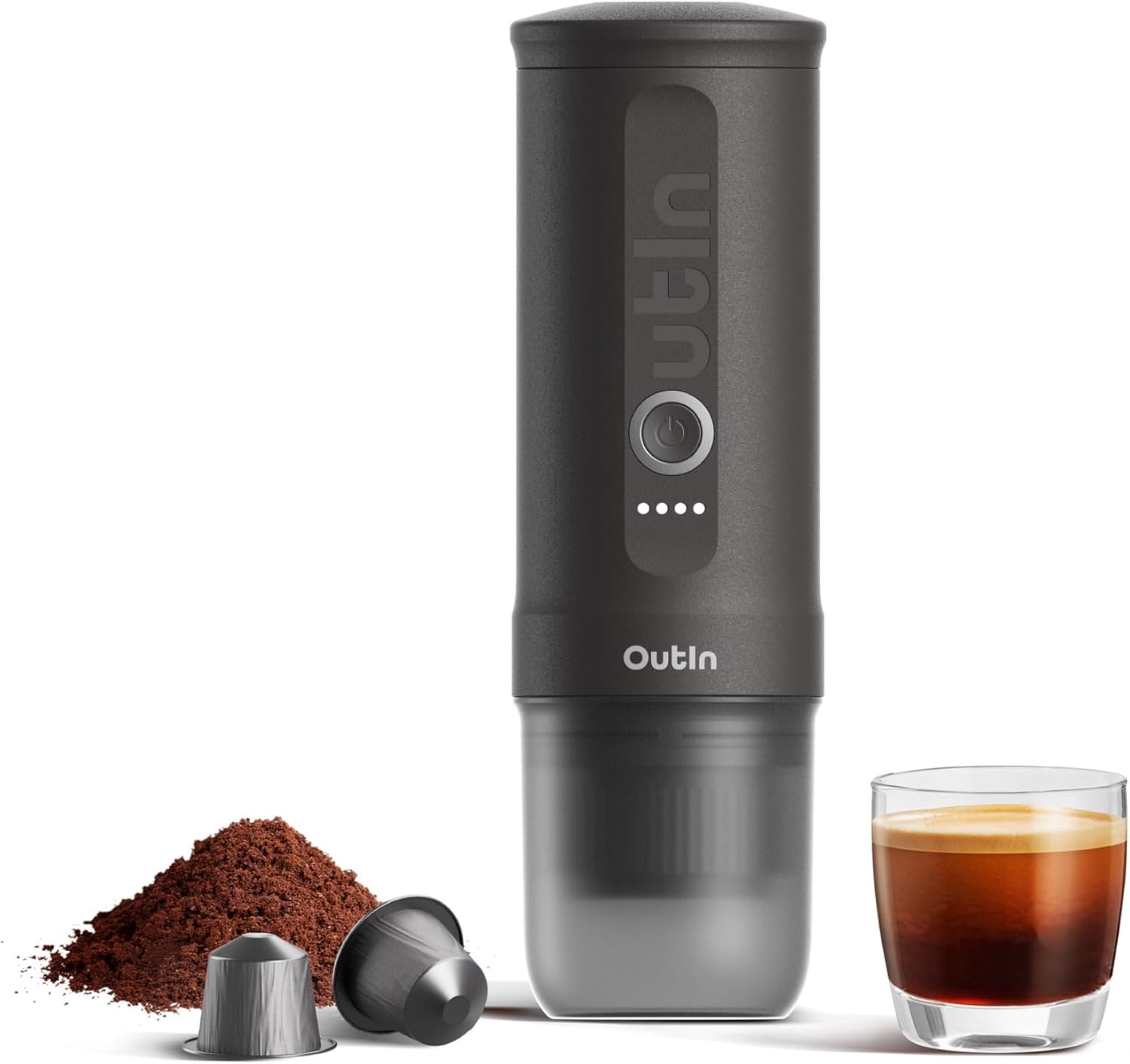
3. OutIn Nano Portable Espresso Machine
OutIn Nano remains one of the easiest self-heating portable espresso machines to understand: add 50–80 ml of hot or cold water, use ground coffee or a compatible capsule, and let the machine handle heating and extraction.
The Nano is lighter than Mino and Pixapresso, but it does not have Mino’s fast-charging/outdoor feature set or Pixapresso’s temperature and dose customization. That actually makes it attractive for buyers who want a straightforward portable electric espresso maker rather than a miniature programmable coffee system.
OutIn states that a fully charged Nano can heat 50 ml of 25°C / 77°F water to extraction temperature up to five times. If you start with hot water, the battery is used mainly for extraction and the manufacturer claims more than 200 brews per charge.
Who should buy the OutIn Nano?
Choose Nano if you want a simpler, lighter rechargeable travel brewer and do not need the advanced controls of Pixapresso or the outdoor-specific features of Mino.
Pros
- Lightest self-heating model in this four-product comparison
- Ground coffee + capsules
- Simple one-button workflow
- 12V/24V vehicle charging support listed by OutIn
Cons
- Slower heating than Mino
- No multi-temperature control like Pixapresso
- Cold-water brewing is limited by battery heating demand
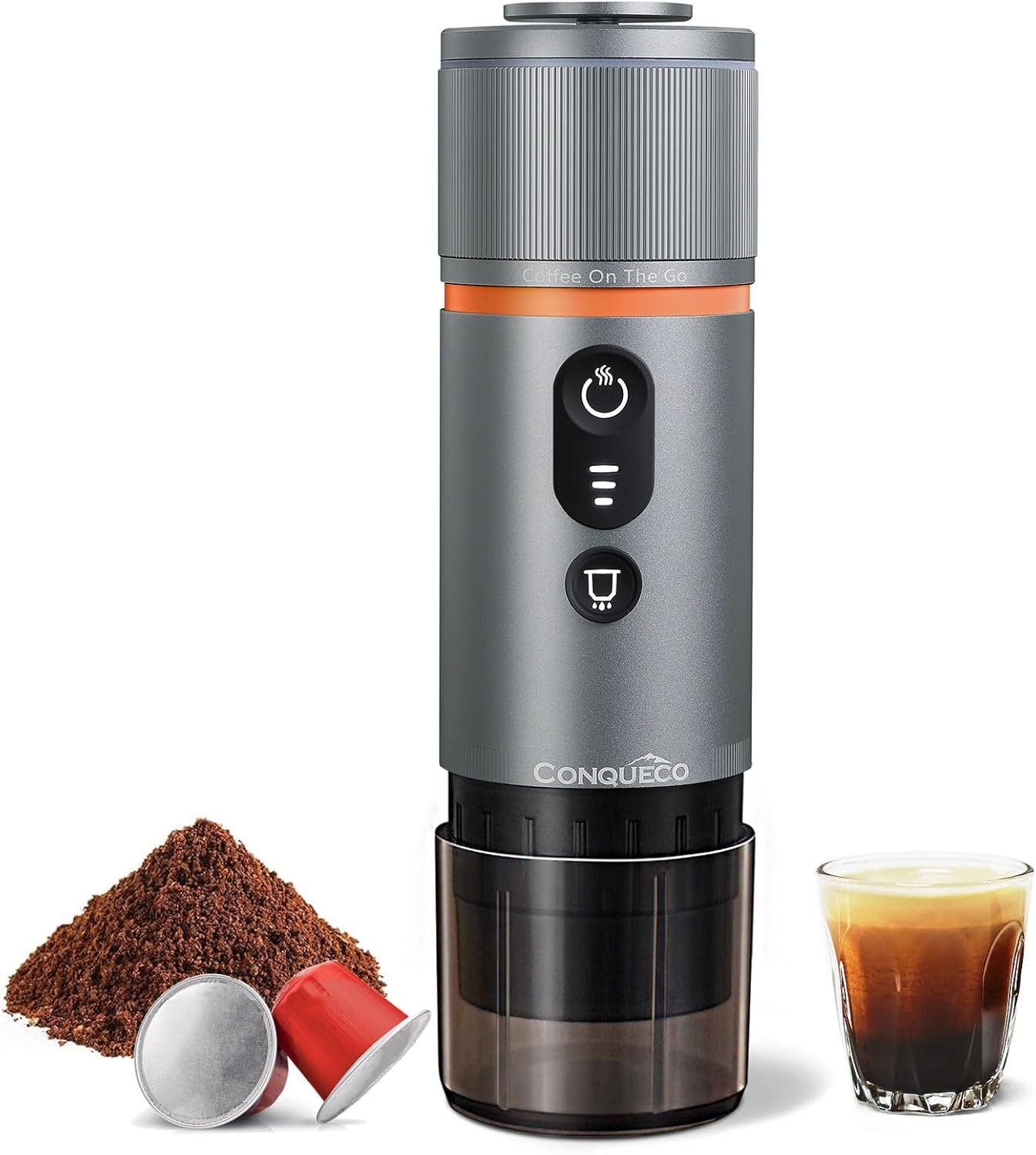
4. CONQUECO PCM020 Rechargeable Portable Espresso Maker
CONQUECO PCM020 stands out less for minimal weight and more for its large 13,500mAh battery and road-trip charging options. The manufacturer lists 12V/24V vehicle charging, self-heating in about three minutes, support for ground coffee and Nespresso Original-compatible capsules, and up to eight 40 ml cold-water brews per charge.
The tradeoff is bulk. At roughly 948 g in CONQUECO’s own comparison section, PCM020 is notably heavier than OutIn Nano or Mino. That makes it less attractive for ultralight travel but more reasonable for a car, truck, RV, campsite, or office where battery capacity matters more than backpack weight.
One caution: CONQUECO’s current product page contains inconsistent marketing copy in different sections—for example, some text references different pressure and cup-count figures. For that reason, we use the manufacturer’s main specification/FAQ claims above and recommend confirming the current Amazon listing before purchase.
Who should buy the CONQUECO PCM020?
Choose it if you travel by vehicle and want a rechargeable espresso machine with a large battery, self-heating, and both capsule and ground-coffee options. Backpackers should probably choose a lighter model.
Pros
- Very large advertised battery capacity
- 12V/24V road-trip charging support
- Ground coffee + Original-compatible capsules
- Self-heating without a kettle
Cons
- Heavier than the other models here
- Official product page contains some inconsistent specification copy
- Less attractive for ultralight backpacking
Battery Life, Heating Time & Charging: What Actually Matters
The phrase best rechargeable espresso machine can be misleading if you only compare battery capacity. A larger mAh number does not automatically mean a better travel machine because heating cold water is the biggest energy drain and brands use different voltage architectures.
Cold water vs preheated water
If you start with room-temperature water, the machine must spend substantial energy raising water to brewing temperature before extraction. That is why the cold-water cup count is much lower. If you already have hot water, all four machines can use far less battery energy per shot.
Fast charging can matter more than maximum capacity
OutIn Mino is notable because the manufacturer lists a 20%–80% recharge in 45 minutes and a full charge in about 90 minutes. Pixapresso lists about 2.5 hours for a full charge. CONQUECO emphasizes vehicle charging and battery capacity instead, which may be more useful on long road trips.
Do not compare “bar” ratings like horsepower
These machines publish maximum pump ratings from 18 to 22 bar, but that does not mean the 22-bar model automatically makes better espresso. Coffee dose, grind consistency, the brewing chamber, temperature stability, flow resistance, and extraction profile all matter more than a single maximum pressure number.
Which Portable Electric Espresso Maker Is Best for Your Trip?
Camping & outdoors
OutIn Mino is our first pick because of its fast heat-up, IP67-rated protection, high-altitude positioning, and fast charging.
Hotels & office
WACACO Pixapresso works well when you value temperature control, larger water capacity, and the choice between pods and fresh grounds.
Cars, RVs & trucks
CONQUECO PCM020 makes sense when vehicle charging and a larger battery matter more than minimum packed weight.
Budget-conscious travel
OutIn Nano is the simpler established choice if you do not need Mino’s rugged features or Pixapresso’s advanced controls.
Ground Coffee vs Capsules in a Battery-Powered Espresso Maker
All four picks on this page support both ground coffee and some form of Nespresso Original-compatible capsule workflow. That is useful because the best format changes by trip.
Ground coffee gives you more control over beans, roast level, freshness, and dose. Pixapresso offers the most flexible dose range here at 8–16 g, while Mino lists up to 12 g.
Capsules are faster and cleaner in hotels, cars, offices, and airports. They also eliminate the need to carry a grinder. The downside is less control over coffee freshness and dose, plus packaging waste.
If you are serious about using fresh coffee, our coffee grinding guide for portable makers explains why grind size becomes more important as your espresso setup gets less forgiving.
Battery-Powered vs Manual Portable Espresso Makers
Electric portable espresso makers win when convenience is the priority: they automate pumping and, on the models above, heat cold water. Manual brewers are usually lighter, mechanically simpler, and never run out of battery—but they require a kettle, stove, or another hot-water source.
If you camp with a stove anyway, a manual machine may still be the smarter lightweight choice. See our best manual portable espresso maker guide before paying extra for a battery and heater.
If you are deciding between espresso-style extraction and a completely different travel brewing method, read our portable espresso maker vs AeroPress comparison.
More Portable Espresso Guides
Rechargeable Portable Espresso Machine FAQ
What is the best rechargeable espresso machine for travel?
For most travelers, we prefer OutIn Mino because it combines fast self-heating, fast USB-C charging, up to six manufacturer-rated cold-water brews per charge, ground/pod compatibility, and an IP67-rated outdoor design. Pixapresso is better if brew customization matters more than ruggedness.
Can a portable electric espresso maker heat cold water?
Yes. Every model in this guide has a built-in heater. Manufacturer-rated cold-water heat-up times range from about 149 seconds for OutIn Mino to roughly three minutes for several competitors, depending on water volume and conditions.
How many espressos can a battery-powered machine make per charge?
When starting with room-temperature water, manufacturers currently claim roughly five to eight espresso-sized brews per charge for the models in this guide. Starting with hot water dramatically increases extraction count because the battery does not have to heat the water.
Can rechargeable espresso machines use Nespresso capsules?
These four models support Nespresso Original-line or compatible capsule formats, but compatibility can vary with third-party capsules. Always confirm the current product listing before buying.
Is 20 or 22 bar better for espresso?
Not automatically. Maximum pump pressure is not a quality score. Grind, dose, temperature, flow, coffee chamber design, and actual extraction resistance are more important than simply choosing the highest advertised bar number.
Can I bring a battery-powered espresso maker on a plane?
Manufacturers such as OutIn and WACACO instruct users to comply with airline battery rules and carry these devices in carry-on baggage rather than using them during flight. Airline and TSA rules can change, so verify the battery requirements with your airline before traveling.
Final Verdict
OutIn Mino is our best overall rechargeable travel espresso pick for users who want a fast, rugged, one-button machine. WACACO Pixapresso is the better choice for people who want temperature control, pre-infusion, larger dose flexibility, and a bigger water tank. OutIn Nano remains a simpler value-oriented option, while CONQUECO PCM020 is most compelling for vehicle-based travel where battery capacity and 12V/24V charging matter.
Whichever model you choose, buy based on your complete travel workflow—not the highest pressure number. Think about where hot water comes from, whether you carry a grinder, how many cold-water brews you need between charges, and whether you prefer fresh coffee or capsules.