
Coffee Grinding for Portable Makers: The Complete 2025 Guide
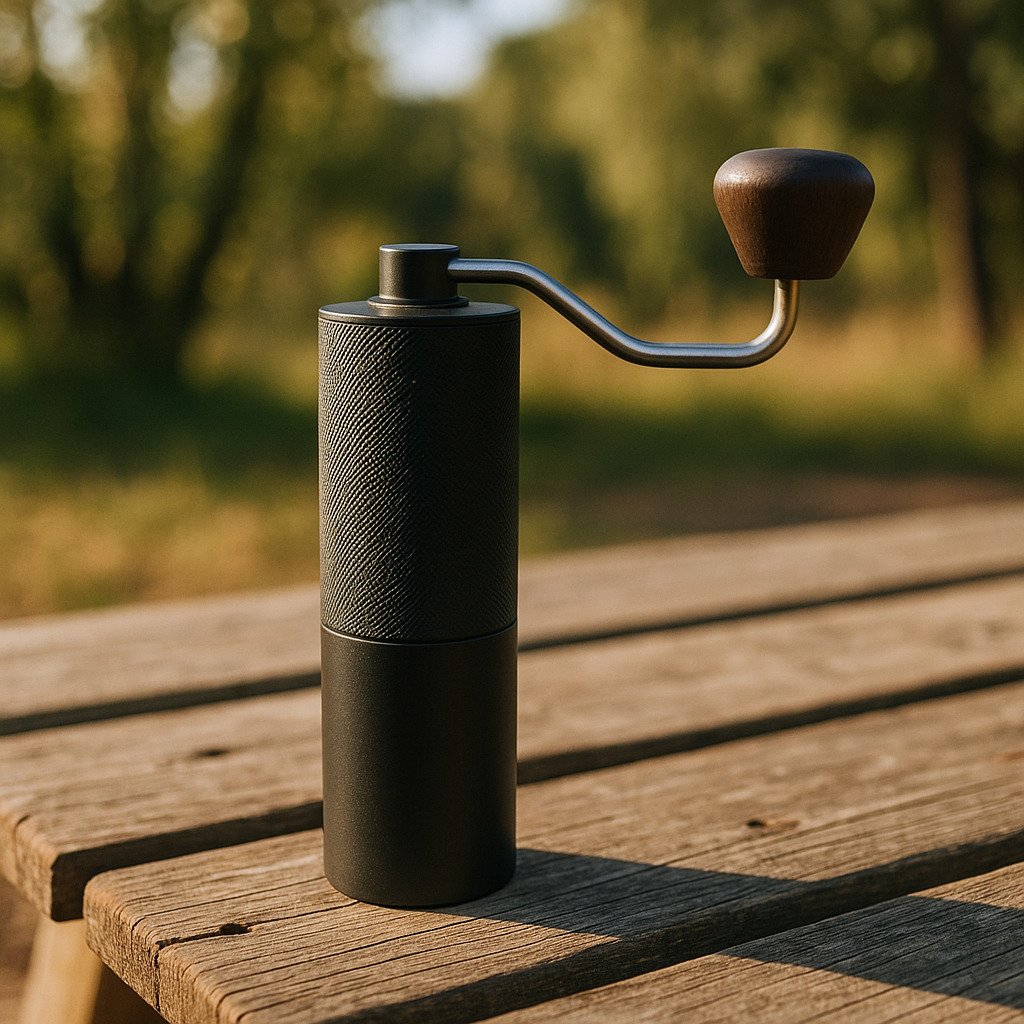
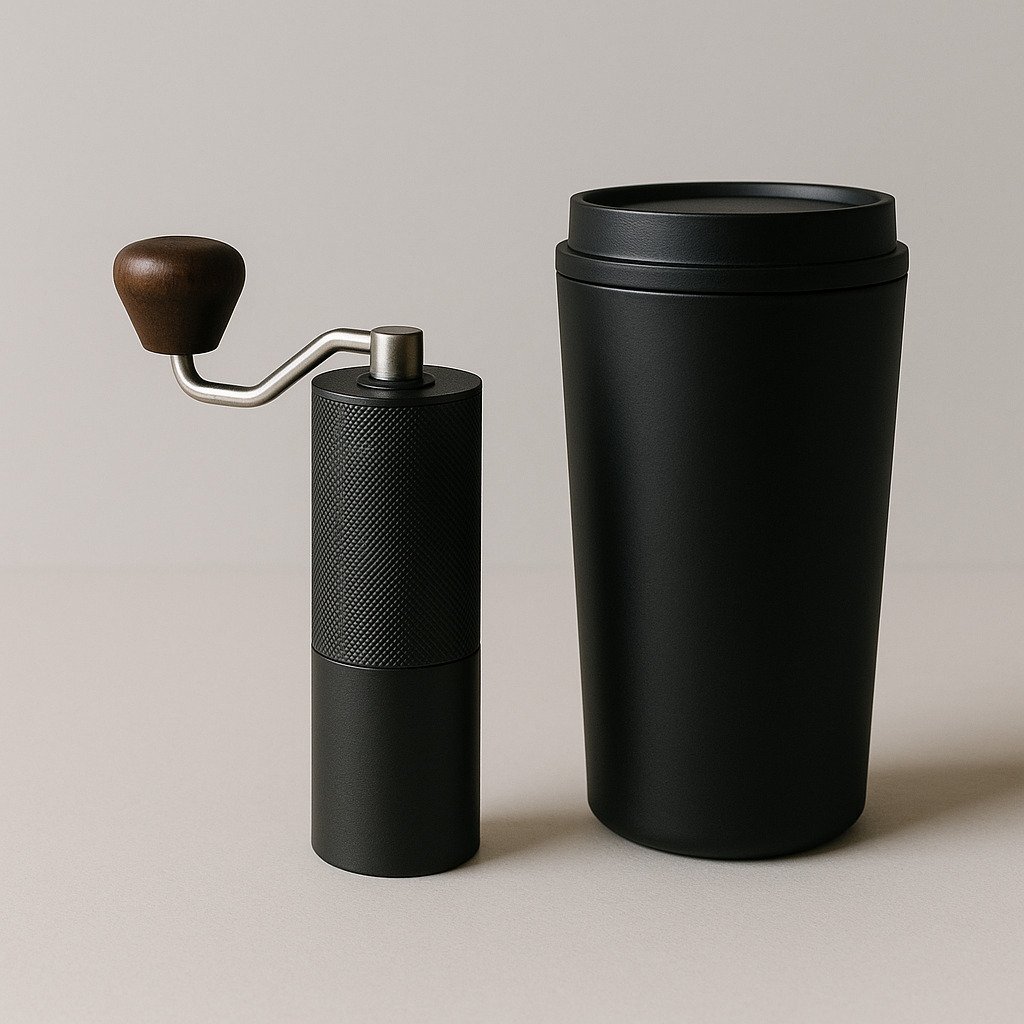
Portable coffee gear has changed the way people in the United States travel, camp, study, and work. From hotel rooms and dorm rooms to RVs, trailheads, and airport lounges, great coffee is now possible almost anywhere. The real game-changer is not just the brewer you pack, but the portable coffee grinder you use to prepare your beans.
This guide walks you through everything you need to know about coffee grinding for portable makers: how to choose the right grinder, how to dial in grind size for devices like Nanopresso, Picopresso, and AeroPress, and how to keep your setup efficient on the road or at the campsite.
Why Fresh Grinding Matters for Portable Coffee Brewing
When you brew coffee away from home, you are already compromising on some variables: water quality, kettle control, and perfect stability in your setup. Freshly ground coffee helps you win back a lot of that lost quality. It improves aroma, sweetness, and consistency more than almost any other upgrade.
- Better flavor clarity: freshly ground coffee reveals more sweetness and distinct tasting notes.
- Stronger crema: portable espresso makers pull richer, more stable shots with fresh grounds.
- Higher consistency: uniform grind size improves extraction across different portable brewers.
- Less bitterness: fewer fines and boulders mean less over- and under-extraction in the same cup.
Pre-ground coffee loses aroma very quickly. For travel, camping, or everyday carry, a portable coffee grinder is the most reliable way to keep flavor high while your gear stays compact.
If you are still choosing a brewer to pair with your grinder, explore our roundup of best portable coffee makers 2025 to build a complete kit.
Manual vs. Electric Portable Coffee Grinders
Most travel setups use either a compact manual grinder or a small battery- or USB-powered electric grinder. Each style has trade-offs you should consider before buying.
Manual Portable Coffee Grinders
Manual grinders are the classic choice for travel and camping. They pack small, work anywhere, and offer excellent grind quality when built around proper burrs.
Advantages
- Lightweight and compact for backpacks, carry-ons, and desk drawers.
- No need for outlets, batteries, or power banks.
- Excellent grind consistency with modern burr designs.
- Quiet operation in dorm rooms or shared spaces.
Limitations
- Requires physical effort, especially for fine espresso grinding.
- Grinding multiple doses back to back can be slow.
Electric Portable Coffee Grinders
Portable electric grinders are perfect for RVs, road trips, and hotel stays where weight is less critical and convenience matters more.
Advantages
- Fast grinding for several cups in a row.
- Less physical effort; easier for families or groups.
- Consistent grind for drip, AeroPress, and pour-over.
Limitations
- Heavier and bulkier than manual grinders.
- Depend on charging (USB-C, batteries, or wall power).
How to Choose the Right Portable Coffee Grinder
Once you decide between manual and electric, it is time to look more closely at the burrs, grind adjustment, capacity, and overall build quality.
Burr Material and Design
Burrs are the heart of any grinder. Their material and geometry determine how uniform and consistent your grind will be.
| Burr Type | Main Benefits | Best Use Cases |
|---|---|---|
| Stainless steel burrs | Very sharp, fast cutting, highly consistent particle size | Portable espresso makers like Nanopresso, Picopresso |
| Ceramic burrs | Durable, heat-resistant, often more forgiving | AeroPress, pour-over, French press, camping drip brewers |
For serious portable espresso, steel burrs provide more precision and make dialing in easier. For general travel brewing, ceramic burrs can be a long-lasting and budget-friendly option.
Grind Adjustment System
- Stepped adjustment: distinct clicks for each setting; easy to remember and repeat.
- Stepless adjustment: near-infinite control; ideal for advanced espresso users who want to fine-tune flow and shot time.
Weight, Size, and Capacity
For most travelers, a grinder weight between 350 g and 450 g balances portability and stability. Ultralight backpackers may prefer a smaller capacity grinder under 350 g, while campers and RV users can comfortably carry something heavier with a larger hopper.
- 20–25 g capacity — perfect for single espresso shots, Nanopresso/Picopresso, or one AeroPress.
- 30–35 g capacity — ideal for pour-over cones, shared brewing, or larger mugs at camp.
Build Quality and Durability
A travel grinder sees more drops, bumps, and rough conditions than a home grinder. Look for:
- Aluminum or stainless steel body construction.
- Sturdy steel axle and burr carrier.
- Smooth, wobble-free crank action.
- Non-slip grip or silicone band for outdoor use.
Best Overall Travel Grinder
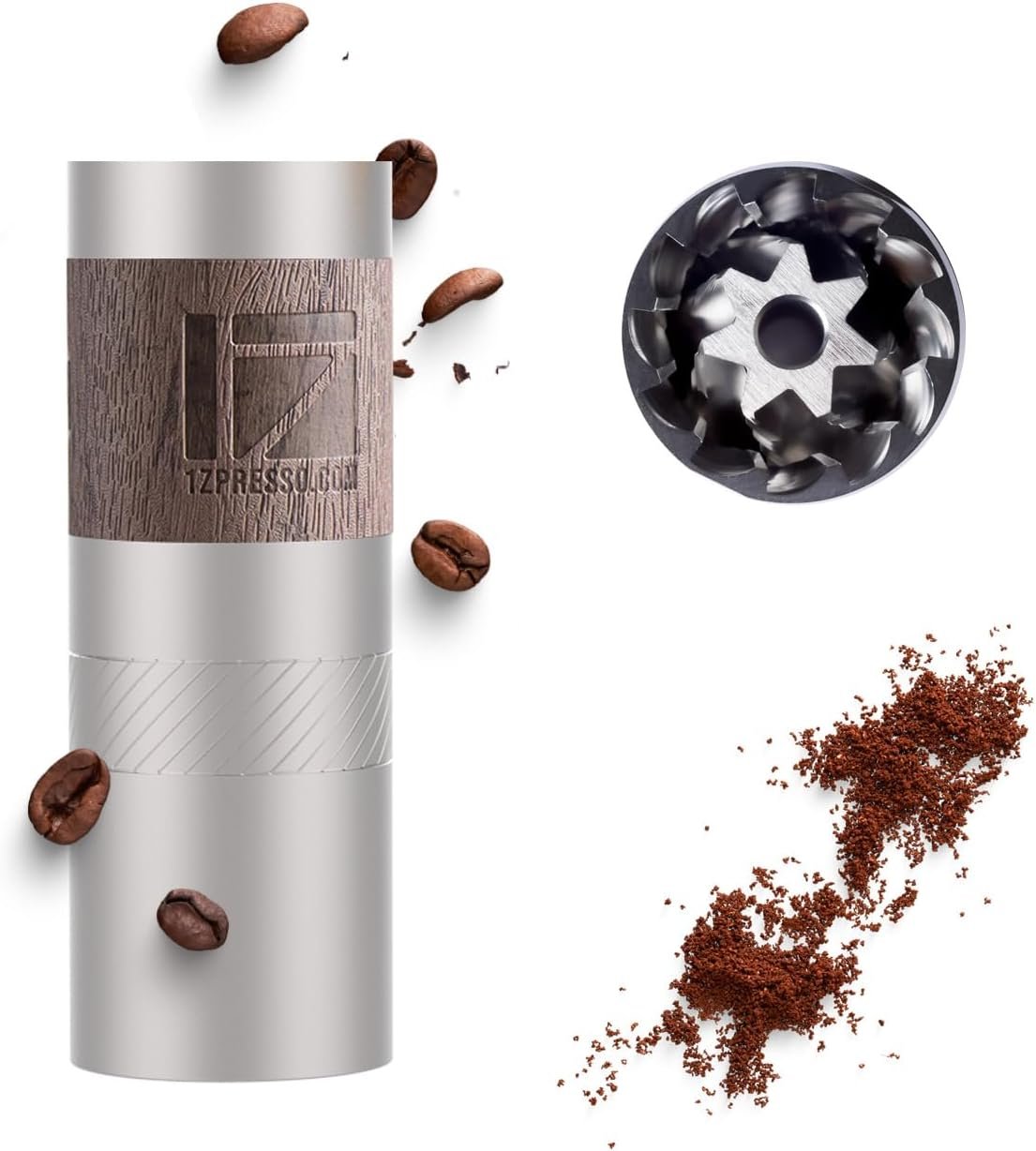
1Zpresso Q2 Manual Coffee Grinder
The 1Zpresso Q2 is a compact, precision-focused manual grinder built for travel, camping, and everyday brewing. Its stainless steel burr set delivers consistent grinding for espresso and filter coffee, while the click-based adjustment lets you repeat your favorite settings with ease. At only 385 g, it slips into backpacks and carry-on luggage — a perfect match for Nanopresso, Picopresso, and Staresso.
- Stainless steel burr set for consistent espresso grinding.
- Precise click-based adjustment with repeatable steps.
- Compact 385 g body ideal for travel and camping.
- Excellent pairing with portable espresso makers.
Best Budget-Friendly Travel Grinder
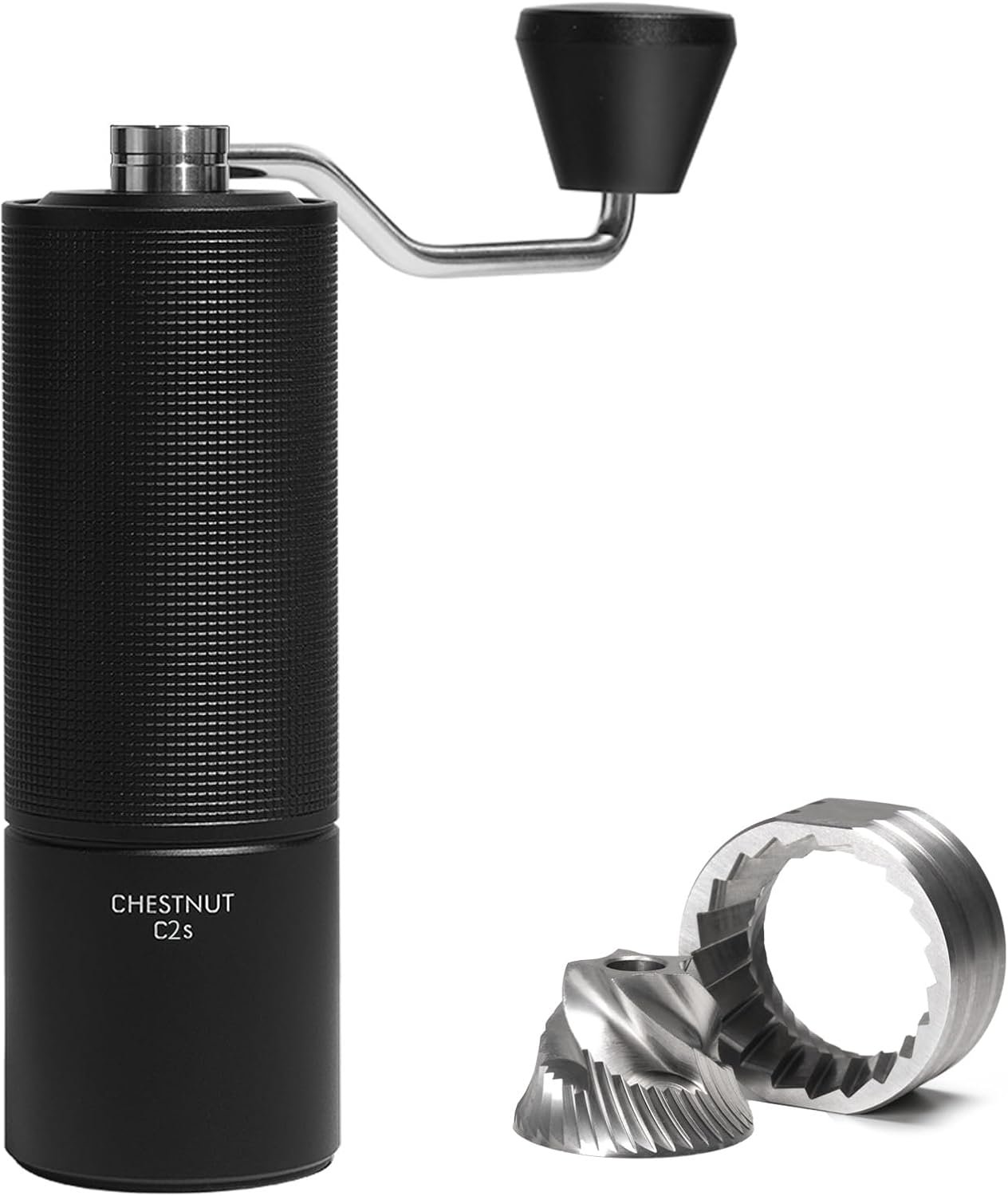
Timemore C2 Manual Coffee Grinder
The Timemore C2 delivers sharp stainless steel burr performance at an accessible price. Its 430 g lightweight body makes it a smart pick for students, new travelers, and anyone building a compact coffee setup. It dials in easily for AeroPress, pour-over, and French press, offering a big upgrade over basic blade grinders without stretching your budget.
- Sharp stainless steel burrs for clean, even grinding.
- Lightweight 430 g design for packs and suitcases.
- Great value option for beginners and students.
- Easy to dial in for AeroPress, pour-over, and French press.
Durable & Compact Travel Grinder
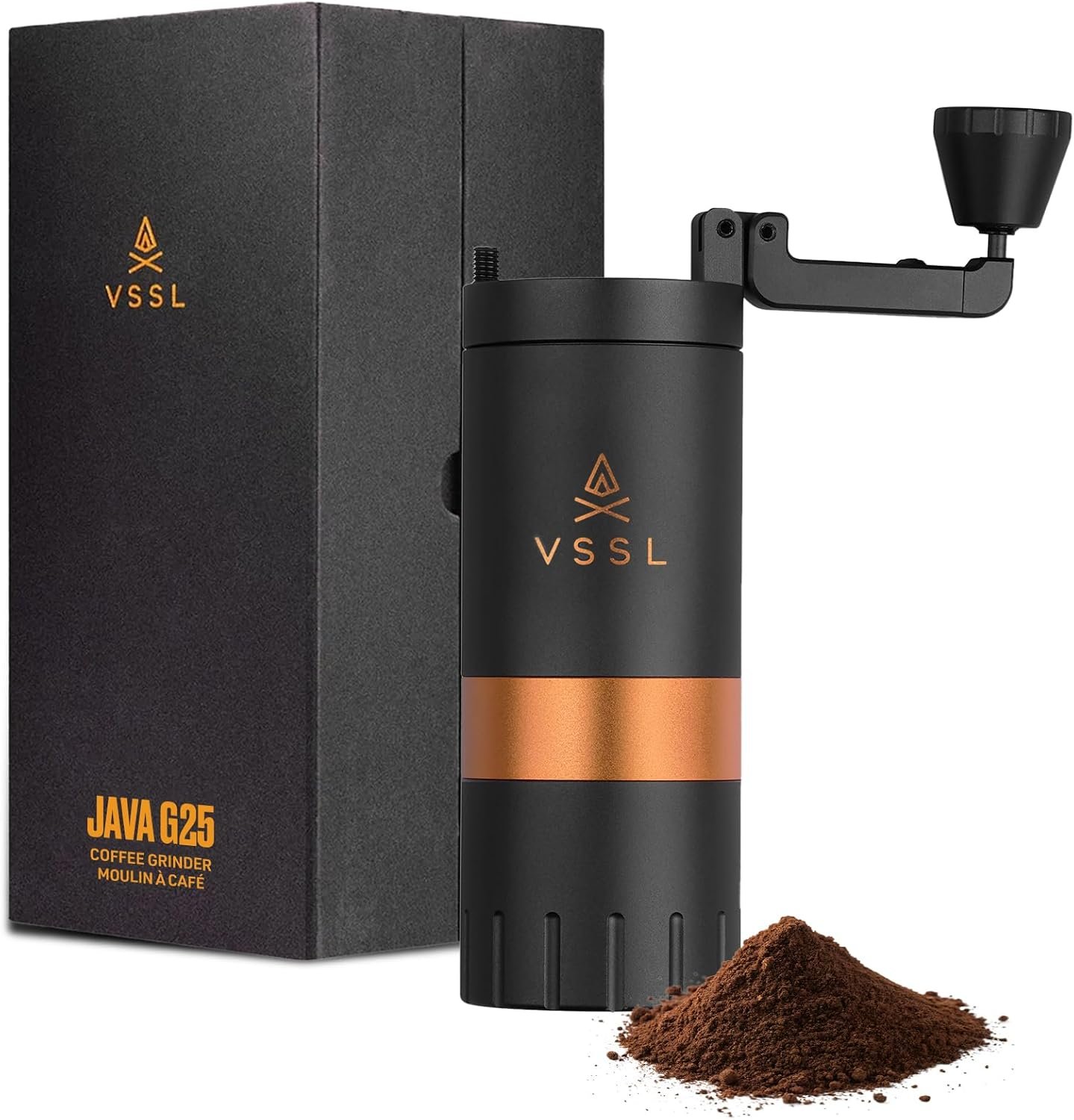
VSSL Java G25 Manual Coffee Grinder
The VSSL Java G25 is a rugged, travel-ready manual grinder designed for camping, hiking, or daily use. Its stainless-steel conical burrs provide consistent grinding, and with up to 25 g bean capacity and 50 grind settings, it’s perfect for pour-over, AeroPress, or portable espresso setups — wherever you go.
- 430 g aluminum & stainless build for durability and longevity. :contentReference[oaicite:1]{index=1}
- Stainless conical burrs + dual bearings ensure uniform, repeatable grind. :contentReference[oaicite:2]{index=2}
- 50 grind settings — suitable for espresso, pour-over, and camping brews. :contentReference[oaicite:3]{index=3}
- Compact size with carabiner-style foldable handle — easy to pack. :contentReference[oaicite:4]{index=4}
Grind Size Guide for Popular Portable Coffee Makers
Dialing in the right grind size is just as important as choosing a good grinder. Use this table as a starting point and adjust based on taste and flow.
| Brewing Method | Recommended Grind Size | Texture Example | Notes |
|---|---|---|---|
| Nanopresso / Picopresso | Fine | Table salt | Required for crema and proper pressure in portable espresso makers. |
| AeroPress | Medium-fine | Sand | Balances extraction and plunge resistance; easy to tweak recipes. |
| Pour-over (e.g., V60, cone drippers) | Medium | Sea salt | Creates clear, sweet cups when pour and grind are consistent. |
| French press | Coarse | Breadcrumbs | Reduces sludge in the cup and limits over-extraction. |
| Moka pot | Medium-fine | Fine sand | Produces strong, rich stovetop coffee without choking the brewer. |
| Camping percolator | Medium-coarse | Rough grains | Helps avoid bitterness when brewing over camp stoves or fires. |
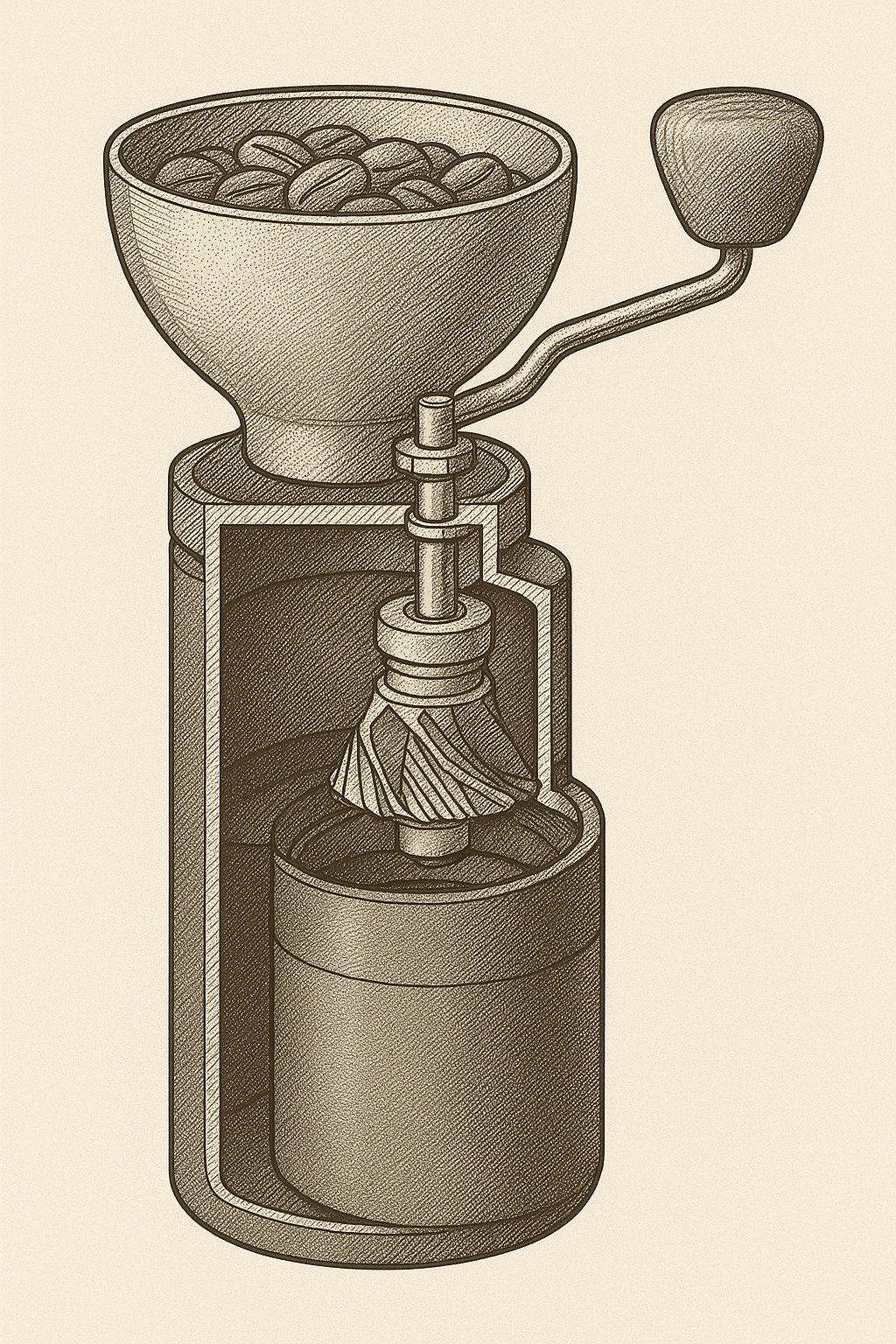
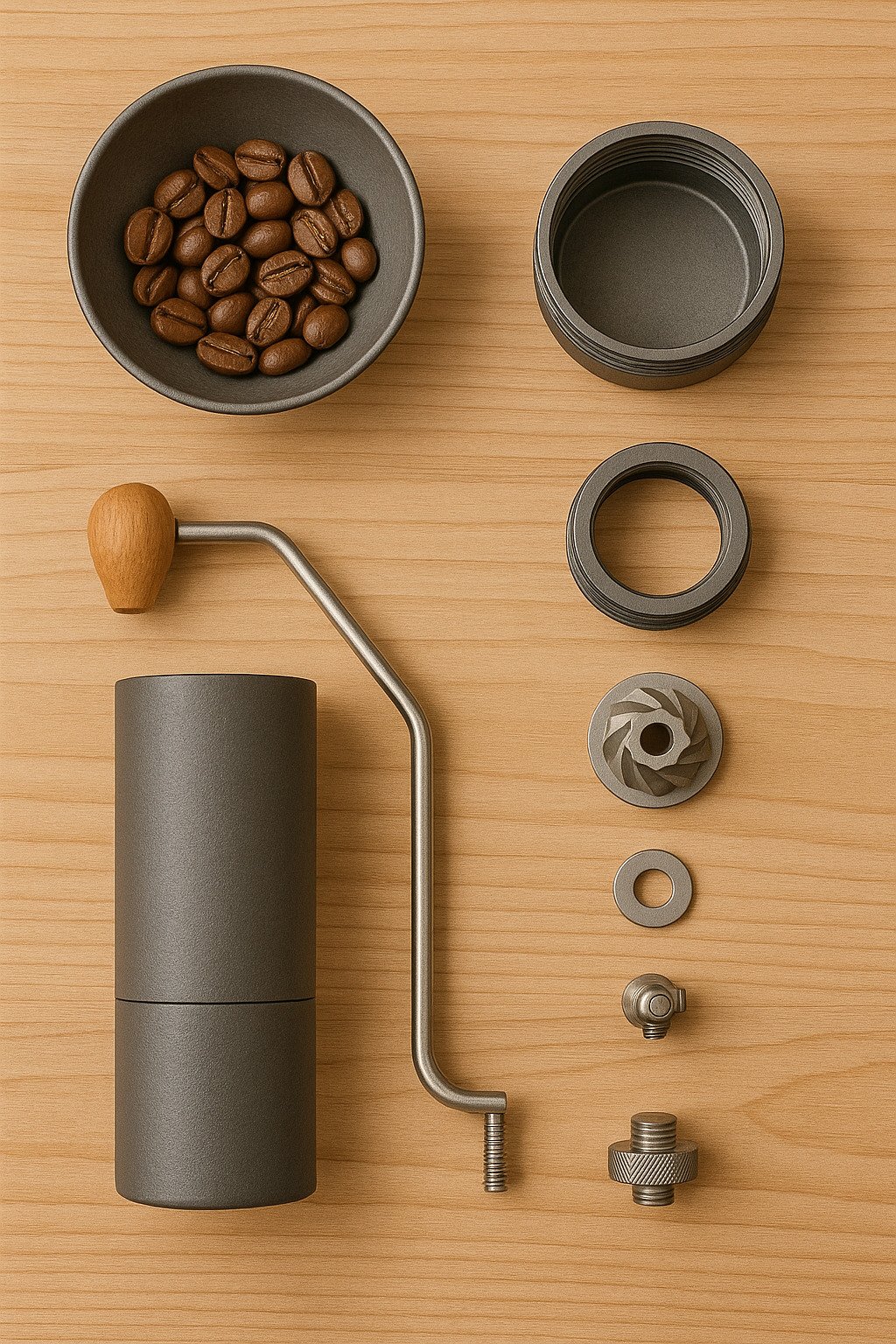
Inside a Portable Coffee Grinder: Burrs, Axles, and Alignment
Understanding how a grinder is built can help you pick a model that stays consistent for years. Portable grinders use a central axle, bearings or bushings, and top and bottom supports to keep the burrs aligned while you crank.

Grinding for Portable Espresso Makers
Portable espresso makers like the Nanopresso and Picopresso are extremely sensitive to grind size and distribution. A small change in grind can completely transform how your shot flows and tastes.
If you want a deeper dive into the gear itself, read our in-depth Wacaco Nanopresso review.
Basic Espresso Grind Guidelines
- Use a fine grind slightly coarser than a traditional 9-bar espresso machine.
- Nanopresso dose: about 8–10 g of coffee.
- Picopresso dose: usually 12–18 g depending on basket size and recipe.
- Pump steadily for 25–35 seconds for a balanced shot.
Common Issues and Fixes
- Shot runs too fast, tastes weak: grind finer and ensure the coffee bed is level.
- Shot is extremely slow or choked: grind slightly coarser or reduce the dose.
- No crema at all: beans may be stale, or grind is too coarse.
AeroPress Travel Grinding and Recipes
The AeroPress is one of the most travel-friendly brewers on the market. It works beautifully with compact manual grinders and tolerates a wide range of grind sizes and recipes.
- Start with a medium-fine grind.
- Use 13–16 g of coffee per serving.
- Brew for 1:45–2:30 minutes depending on your recipe.
For more detailed recipes, inverted methods, and camping routines, check out our dedicated AeroPress travel coffee guide.
Camping Coffee Grinding Tips
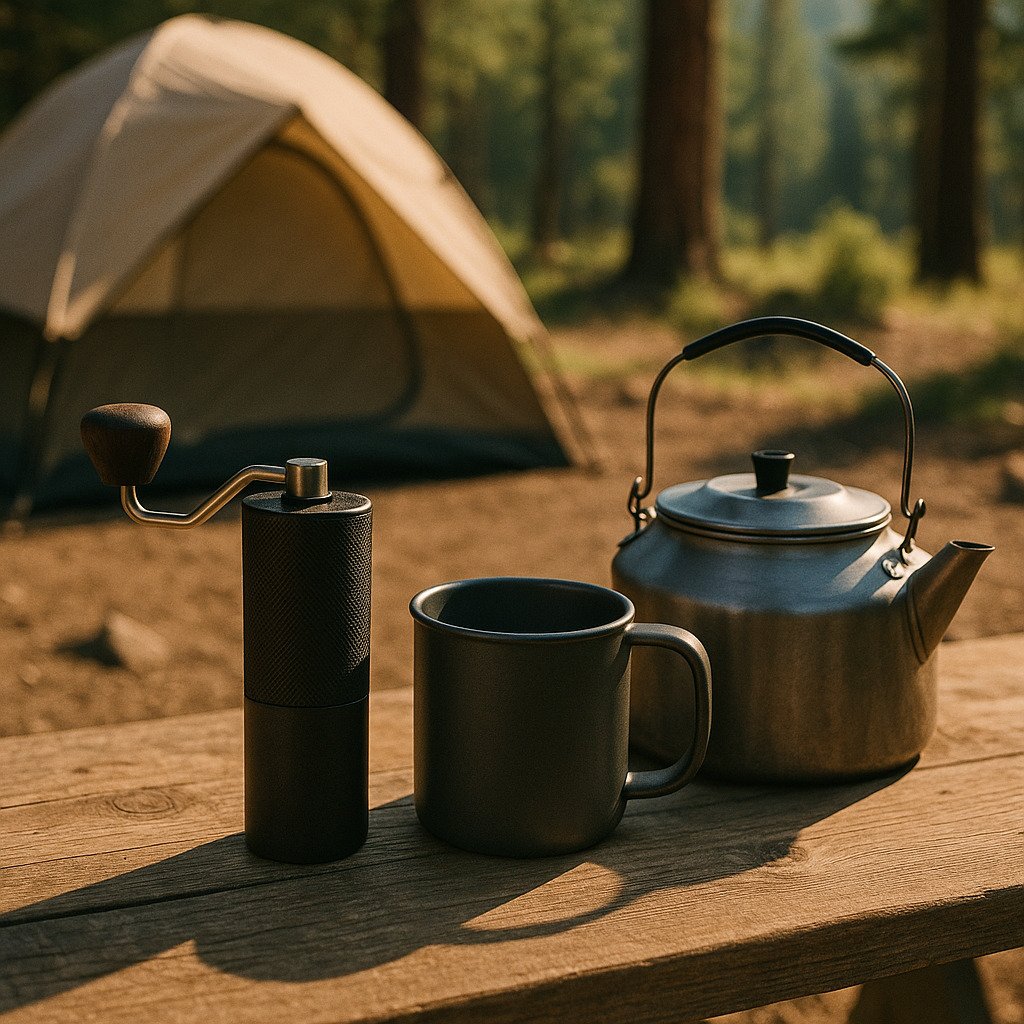
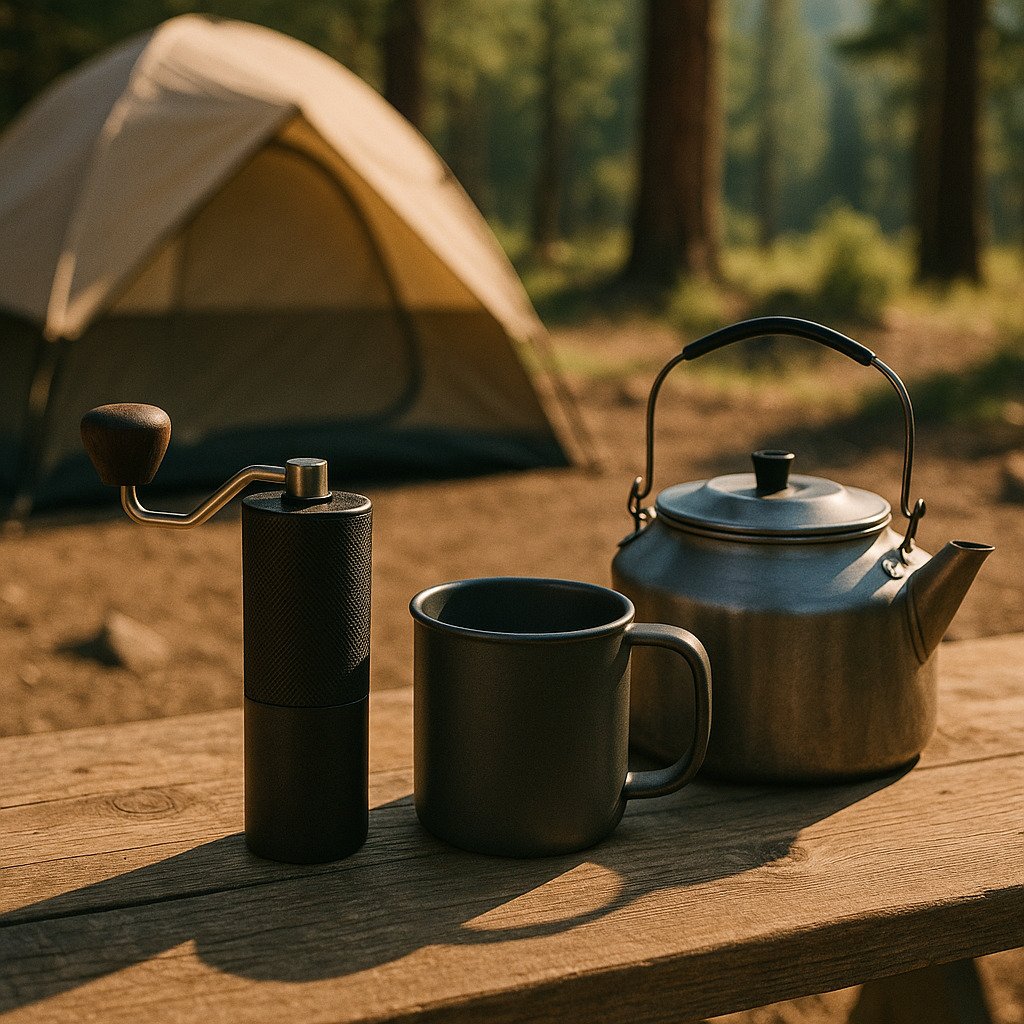
Outdoor brewing adds variables like wind, cold temperatures, and uneven surfaces. A good camping coffee grinder should be easy to grip, stable to crank, and tough enough to survive drops and dust.
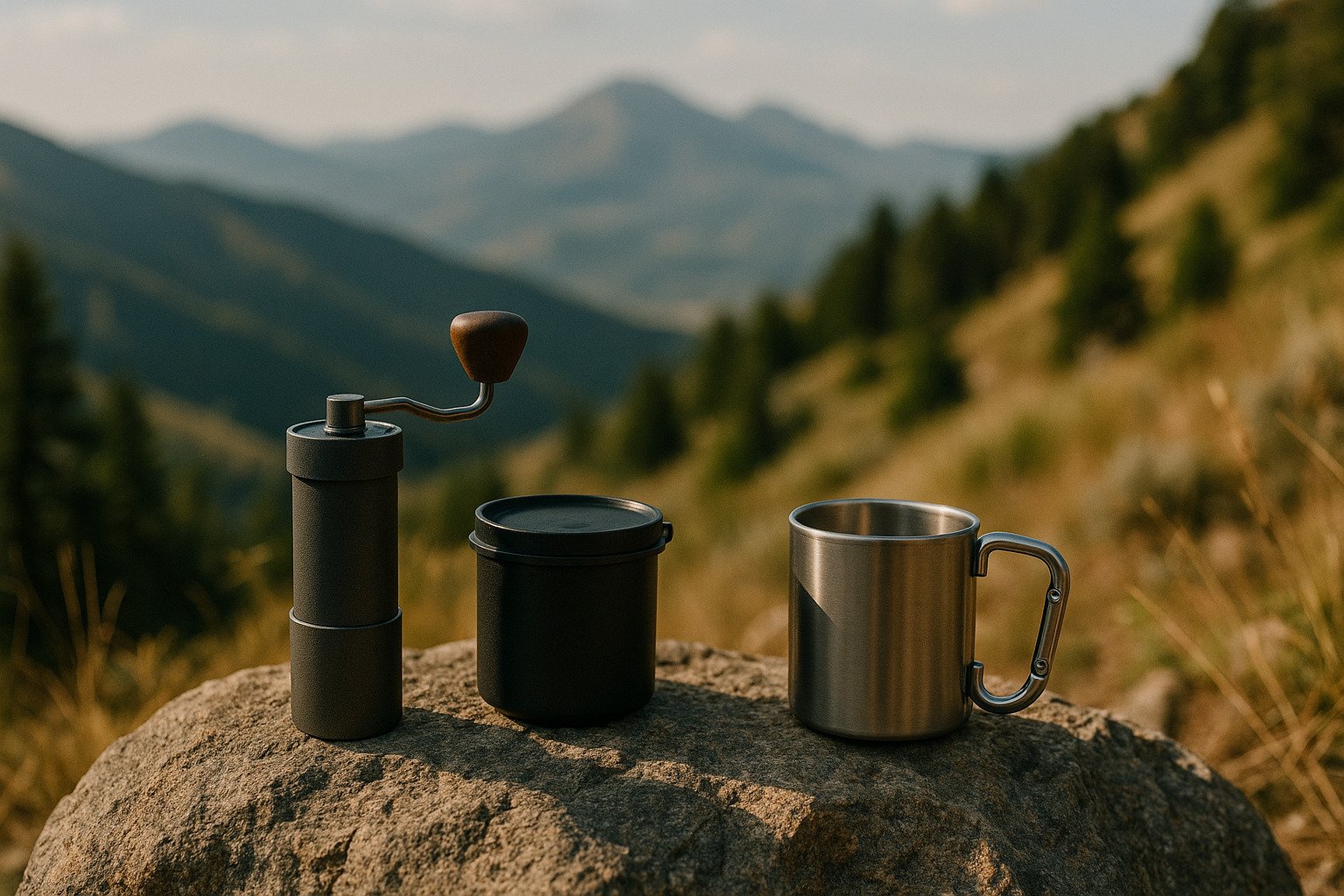

- Store beans in airtight travel canisters or screw-top tubes.
- Choose metal burrs if you often brew in cold or windy conditions.
- Grind slightly coarser for percolators and cowboy-style brewing to avoid bitterness.
If you use stove systems, take a look at our Jetboil Coffee Press review to see how a portable grinder fits into a full camping coffee system.
Maintaining Your Portable Coffee Grinder
Regular maintenance keeps your portable grinder smooth, quiet, and accurate. Coffee oils and micro-particles build up over time, especially at finer settings.
| Usage Scenario | Suggested Cleaning Frequency |
|---|---|
| Daily espresso grinding | Every 3–5 days |
| AeroPress and pour-over at home or office | Weekly |
| Camping trips and road trips | After each trip |
Simple Cleaning Routine
- Remove the crank and hopper.
- Unscrew the burr assembly according to the manufacturer’s instructions.
- Brush out coffee dust and fines from the burrs and interior surfaces.
- Wipe burrs with a dry or lightly alcohol-dampened cloth (no soap or water).
- Reassemble and reset your usual grind setting.
Frequently Asked Questions
Is a burr grinder necessary for portable coffee makers?
Yes. Burr grinders create a consistent particle size that allows portable brewers to extract properly. Blade grinders chop beans into random sizes, which leads to weak, muddy, or bitter results.
Can I grind coffee ahead of time for travel?
You can, but you will lose aroma and flavor quickly. For the best results, grind as close to brewing as possible, even if that means grinding a single serving at a time in an airport lounge or at the campsite.
What grind size works best for portable espresso makers?
A fine grind that is just slightly coarser than a traditional espresso grind works best for most portable espresso devices. The goal is to build pressure without choking the shot completely.
Where can I find more portable espresso maker reviews?
To explore more gear and dial in your kit, browse our full section of portable espresso maker reviews and see how different brewers pair with various portable grinders.
Conclusion: Building Your Ideal Portable Coffee Grinding Setup
A well-chosen portable coffee grinder does more than just shrink your home routine into a travel format. It unlocks café-level flavor with compact brewers, lets you experiment with recipes on the go, and keeps your coffee consistent no matter where you wake up.
Start by picking a grinder that matches your lifestyle — manual for hiking and ultralight packing, or electric for road trips and RV life. Then dial in grind size for your preferred brewers, keep your grinder clean, and refine your recipes over time. With the right grinder in your bag, high-quality coffee becomes one of the most reliable parts of your travel routine.