
Wacaco vs AeroPress: Which Portable Coffee Brand Is Better?
Wacaco vs AeroPress is no longer a simple “espresso maker versus coffee press” comparison. Today, WACACO spans compact espresso machines such as Minipresso, Nanopresso, and Picopresso as well as the newer Prestina press brewer, while AeroPress offers a family of immersion-and-pressure brewers built around fast, flexible coffee rather than true espresso extraction.
For most travelers who want easy, forgiving coffee, AeroPress is the simpler choice. By contrast, travelers who specifically want espresso-style shots will usually find WACACO's espresso lineup the stronger fit. Meanwhile, Prestina changes the middle of the comparison because it gives WACACO a lightweight press brewer that competes much more directly with AeroPress on everyday coffee, travel simplicity, and low-pressure immersion brewing.
Affiliate disclosure: Portable Coffee Hub may earn a commission from qualifying Amazon purchases at no extra cost to you.
Wacaco vs AeroPress: Quick Verdict
Choose AeroPress for the easiest all-around travel coffee workflow. As a result, it is forgiving, quick to clean, flexible with recipes, and well suited to black coffee, American-style cups, concentrates, cold brew, and simple hotel or office brewing.
Choose WACACO if your priority is espresso—or if Prestina's paper-free press concept appeals to you. Likewise, Nanopresso and Picopresso offer pressure-based espresso workflows that AeroPress does not try to replicate, while Prestina is WACACO's closest direct alternative to an AeroPress-style travel press.
Wacaco vs AeroPress: What Each Brand Is Really Best At
The biggest mistake in this comparison is treating both brands as if they sell the same kind of brewer. However, they overlap in portability, manual operation, and travel use while still solving different brewing problems. In other words, the right choice depends first on the kind of coffee you want to make.
WACACO's core strength
Compact espresso-focused brewing. Minipresso, Nanopresso, and Picopresso use hand-generated pressure and small coffee baskets to make concentrated espresso-style drinks. Overall, the lineup ranges from beginner-friendly systems to a demanding naked-portafilter workflow.
AeroPress's core strength
Fast immersion brewing with paper micro-filtration and gentle air pressure. In addition, AeroPress is easier to dial in, works across more recipes, and is less dependent on espresso-fine grinding.
Where WACACO now overlaps
Prestina moves WACACO into a much more AeroPress-like category: immersion brewing, low pressure, a full cup rather than a tiny espresso shot, and a workflow focused on simplicity instead of bar-level extraction.
Where they still differ
AeroPress remains a broad coffee brewer first. By contrast, WACACO remains the stronger brand if your travel routine revolves around actual compact espresso hardware and crema-focused shots.
Wacaco Prestina vs AeroPress: The Closest Brand-to-Brand Match
Among WACACO's current brewers, Prestina vs AeroPress deserves special attention because Prestina is the model that most directly overlaps with the AeroPress concept.
Specifically, WACACO describes Prestina as a portable immersion brewer with a cup-driven press mechanism instead of a traditional plunger. In practice, it weighs 254 g / 9 oz, holds 240 ml / 8 oz of water, uses a permanent stainless-steel filter, and typically operates below 1 bar. WACACO recommends a medium grind and positions the brewer around a simple add-coffee, add-water, steep, and press routine.
AeroPress also combines immersion and hand pressure, but it uses a plunger and typically relies on paper micro-filters in its standard configuration. Meanwhile, AeroPress Go integrates a travel mug and lid, while AeroPress Original offers a larger standard brewing chamber. As a result, both brands now have a genuinely comparable manual press category.
| Feature | WACACO Prestina | AeroPress Go | What It Means |
|---|---|---|---|
| Brew style | Immersion + gentle pressure | Immersion + air pressure | Much closer than WACACO's espresso machines are to AeroPress. |
| Filter | Permanent stainless steel | Paper micro-filter standard | By contrast, Prestina avoids disposable paper, while AeroPress emphasizes a very clean cup. |
| Water capacity | 240 ml / 8 oz | 8 oz serving capacity | In practice, both target a practical single travel cup. |
| Weight | 254 g / 9 oz | 323 g / 11.4 oz packed with accessories and filters | Notably, Prestina is especially light as an all-in-one press system. |
| Grinding | Medium | Flexible; recipe dependent | As a result, neither requires an espresso grinder. |
| Paper filters required | No | Yes in standard setup | Prestina has an advantage for travelers who dislike consumables. |
For current Prestina specifications, see the official WACACO Prestina page.
WACACO Espresso Models: Where AeroPress Is Not a Direct Substitute
However, although Prestina may be WACACO's closest AeroPress competitor, much of WACACO's reputation still comes from portable espresso. This is where a broad Wacaco vs AeroPress comparison needs to be careful: AeroPress can make concentrated espresso-style coffee, but it is not designed around the same pressure, basket, and puck-preparation system as WACACO's dedicated espresso makers.
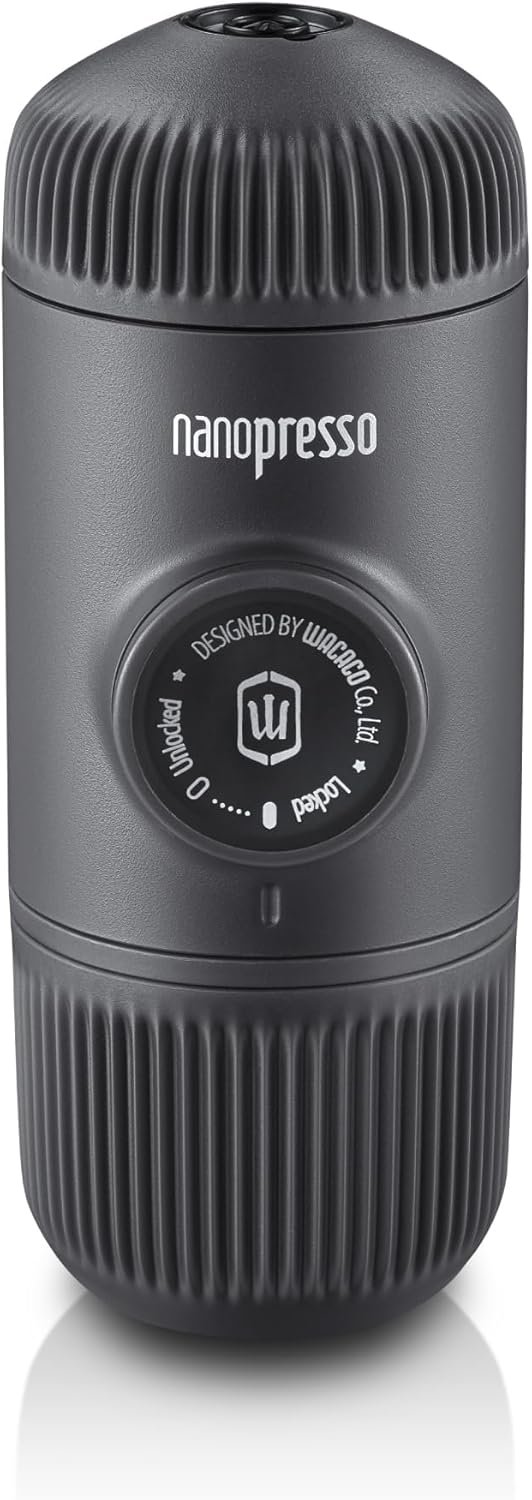
WACACO Nanopresso
A 336 g manual brewer with an 80 ml tank, 8 g standard basket, pressurized portafilter, and manufacturer-rated maximum pressure of 18 bar. Therefore, it is more forgiving than Picopresso and can add capsule compatibility through an optional adapter.

WACACO Picopresso
A 350 g enthusiast-focused brewer with an 18 g, 52 mm stainless-steel basket and naked portafilter. As a result, it rewards espresso-capable grinding and careful puck preparation rather than forgiving travel-coffee technique.
Minipresso sits below those two as WACACO's simpler entry-level family. Meanwhile, the GR uses ground coffee, whereas the NS uses compatible capsules. Therefore, if your decision is specifically Minipresso vs AeroPress, the practical question is whether you want a tiny espresso-style serving or a larger immersion-brewed coffee—not which brand wins in every category.
For a direct WACACO model choice, see our Minipresso NS vs GR comparison.
AeroPress Models: Simpler Coffee, More Recipe Flexibility
By contrast, AeroPress takes the opposite route. Instead of creating a family of tiny espresso machines with different baskets and pressure systems, it builds variations around the same basic immersion-plus-pressure concept.
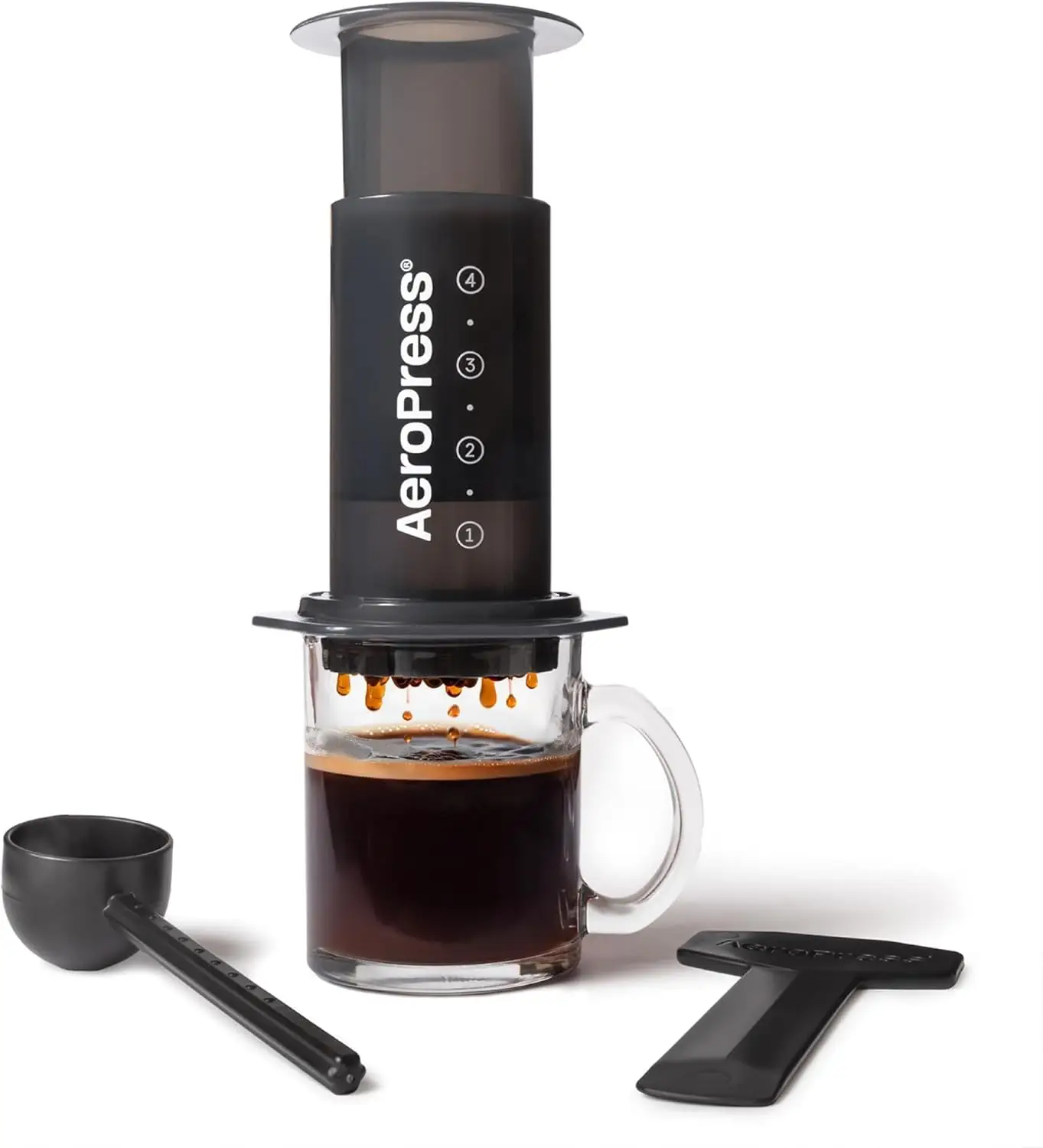
AeroPress Original
The Original is rated for up to a 10 oz serving, is compact and lightweight, and supports standard coffee, espresso-style concentrate, cold brew, and milk-drink bases. Instead, it is designed around fast brewing and quick cleanup rather than espresso pressure.
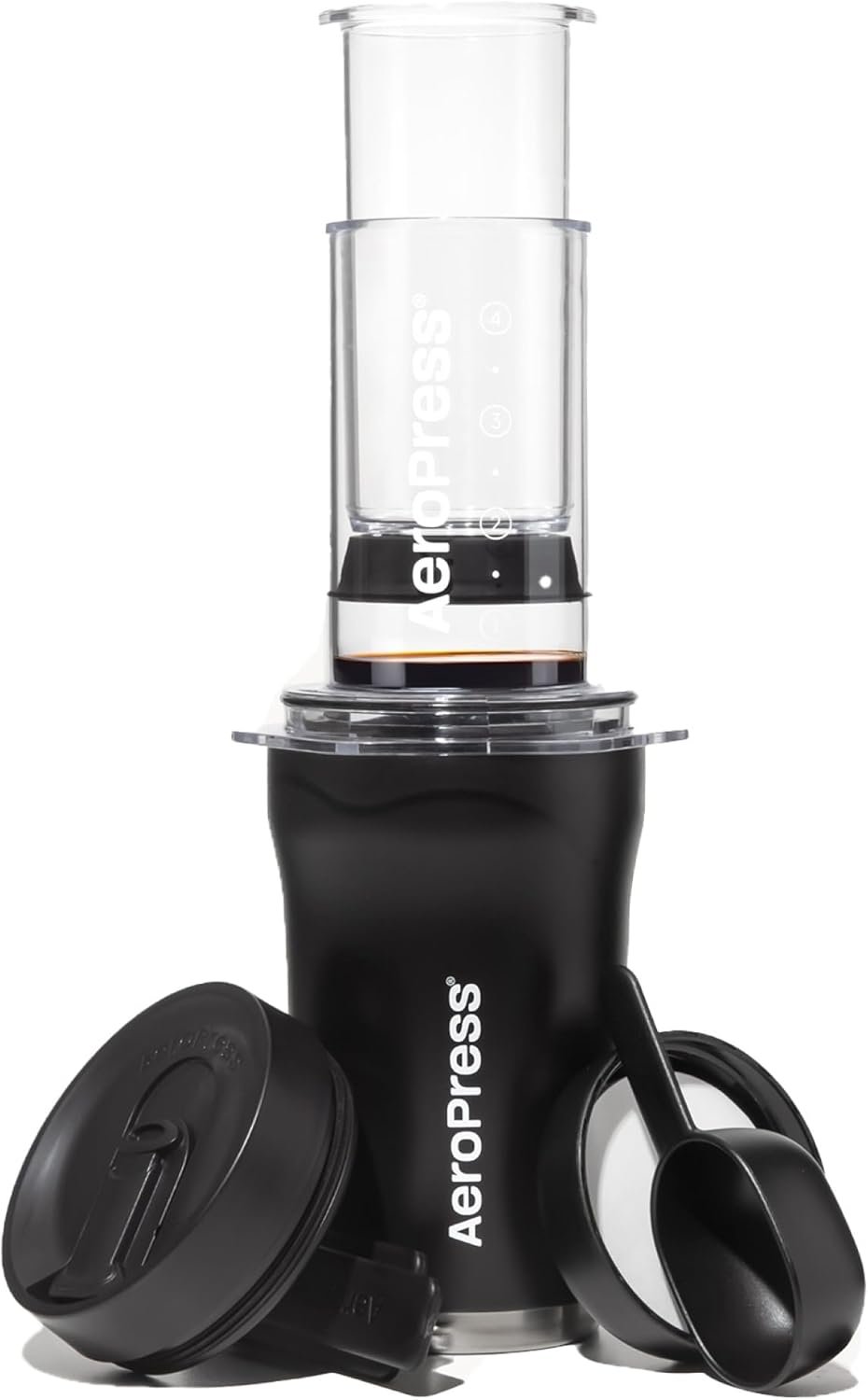
AeroPress Go Plus
Go Plus packages the AeroPress brewing system around a travel tumbler for people who want the brewer and drinking vessel to travel together. In practice, it is aimed at commuting, camping, hotel stays, and road trips rather than espresso-focused use.
In addition, AeroPress sells the smaller Go, the higher-capacity XL line, clear versions, and premium-material versions. However, those variations change capacity, packaging, or materials more than they change the fundamental brew method.
For current model information, see the official AeroPress site.
Wacaco vs AeroPress: Side-by-Side Comparison
| Category | WACACO | AeroPress | Advantage |
|---|---|---|---|
| Main strength | Portable espresso plus Prestina press brewing | Immersion coffee with gentle pressure | Depends on drink style |
| True espresso-style hardware | Yes: Minipresso, Nanopresso, Picopresso | No dedicated espresso basket/pump system | WACACO |
| Easy everyday coffee | Prestina is the closest fit | Core strength of the lineup | AeroPress |
| Beginner friendliness | Varies widely by model | Generally very forgiving | AeroPress |
| Espresso grinder required | Important for Picopresso; less demanding elsewhere | No | AeroPress for simplicity |
| Travel mug integration | Prestina includes cup; some espresso models include small cup | Go and Go Plus are travel-focused systems | Both |
| Paper filter dependence | Prestina uses permanent metal; espresso models use baskets | Paper micro-filters standard on many models | WACACO if avoiding consumables |
| Recipe flexibility | Model-specific | Very high across hot, iced, concentrate, and cold-brew styles | AeroPress |
| Learning curve | Low on Prestina/Minipresso, moderate on Nanopresso, high on Picopresso | Low to moderate | AeroPress |
Wacaco vs AeroPress: Taste and Brew Style
If you drink straight espresso or build small milk drinks from a concentrated shot, WACACO's espresso machines give you the more appropriate hardware. For example, Nanopresso and Picopresso use small coffee baskets and manual pressure to create a concentrated extraction, while Picopresso goes further with a naked portafilter and an 18 g dose.
By contrast, AeroPress produces a different kind of cup. Specifically, its strength is immersion, filtration, and recipe flexibility. For example, you can brew a clean black coffee, a concentrated base for milk, an iced drink, or cold brew without needing to dial in espresso-level grind precision.
Meanwhile, Prestina sits between those worlds. It is not an espresso machine; it is a compact immersion press designed for a fuller-bodied cup through a permanent metal filter. Therefore, that makes Prestina much more relevant to an AeroPress buyer than Nanopresso or Picopresso are.
Ease of Use and Cleanup
AeroPress remains one of the easier manual brewers to learn because the basic process is forgiving: add coffee, add water, steep, press, eject the coffee puck, and rinse. In practice, recipes can become very technical if you want them to, but they do not have to be. Consequently, beginners can start with a simple recipe and experiment later.
By contrast, WACACO varies much more by product. For example, Prestina is intentionally simple and uses a medium grind. Minipresso also simplifies preparation through a small basket or capsule system. By comparison, Nanopresso requires more attention to grind and pumping, while Picopresso is the most demanding because puck distribution, tamping, ultra-fine grinding, preinfusion, and controlled extraction all matter.
As a result, cleanup follows the same pattern. In both cases, Prestina and AeroPress are designed around fast rinsing. However, WACACO espresso machines have more coffee-contact parts and small baskets to rinse, while capsule versions reduce loose-ground mess.
Which Brand Is Better for Travel, Camping, Hotels, and Office Use?
Backpacking
AeroPress Go or Prestina make more sense for travelers who want one full cup with minimal technique. However, Picopresso can be very small, but the grinder and puck-prep kit increase total carried gear.
Camping
In both cases, both brands work well if you already have hot water. For example, choose AeroPress or Prestina for easy coffee; choose Nanopresso or Picopresso if espresso is worth the extra workflow.
Hotels
For hotels, AeroPress is usually easier around a hotel sink. WACACO capsule-capable models can be cleaner if you do not want to handle loose grounds, while Picopresso needs the most preparation space.
Office desk
At the office, AeroPress Original is the easiest everyday choice. Meanwhile, Prestina is also compelling because it is compact and paper-free. However, Picopresso makes sense only if your office routine can accommodate grinding, tamping, and rinsing.
Grinder Requirements: A Hidden Difference
The grinder is one of the biggest reasons these brands feel different in practice. For example, AeroPress can tolerate a broad range of grinds depending on the recipe. Prestina, meanwhile, specifically targets medium-ground coffee. As a result, neither system forces you to own an espresso-capable burr grinder.
By contrast, WACACO's espresso products are different. For example, Nanopresso benefits from a fine, consistent grind, and Picopresso makes grinder quality central to the experience. Therefore, if you buy Picopresso without a grinder that can make small, repeatable espresso adjustments, the brewer can feel much harder to use than its compact size suggests.
Our coffee grinding guide for portable makers explains the practical difference between travel-coffee grinding and espresso-level adjustment.
Price and Total Setup Cost
Comparing only the brewer price can be misleading. For example, AeroPress and Prestina are relatively self-contained manual coffee systems. By contrast, a WACACO espresso machine may need more supporting equipment depending on the model.
- AeroPress: brewer, filters, coffee, and hot water are enough to start. Still, a grinder improves freshness but does not need espresso-level adjustment.
- Prestina: permanent metal filtration means no paper-filter restocking. As a result, medium-ground coffee keeps grinder requirements modest.
- Nanopresso: still compact, but a suitable fine grind helps; optional adapters and kits can increase total cost.
- Picopresso: a capable espresso grinder can cost as much as or more than the brewer itself, and many enthusiasts also carry a small scale.
Because retail prices change over time, fixed numbers can become outdated quickly. Therefore, use the Amazon buttons above to check current availability instead of relying on a fixed price shown in the article.
Wacaco vs AeroPress: Which Should You Buy?
Choose WACACO if…
- Portable espresso is your main goal while traveling.
- Dialing in grind, dose, and technique sounds enjoyable rather than inconvenient.
- Nanopresso's forgiving workflow or Picopresso's higher-control setup fits the way you brew.
- Prestina's paper-free metal-filter press concept appeals to you.
- A broad choice of compact brewing systems under one brand is useful to you.
Choose AeroPress if…
- The easiest all-around portable coffee workflow is your priority.
- Black coffee, American-style cups, iced coffee, or concentrate matter more to you than true espresso.
- Fast cleanup and forgiving recipes are important.
- A normal travel grinder is preferable to carrying an espresso-capable grinder.
- Recipe flexibility matters more than switching between several specialized brewing devices.
For most general coffee drinkers, AeroPress is the safer default. By contrast, for espresso-focused travelers, WACACO is the more relevant brand. At the same time, Prestina makes the choice more interesting because it gives WACACO a direct low-pressure press alternative for people who do not need espresso at all.
Related Portable Coffee Comparisons
Wacaco vs AeroPress FAQ
Is WACACO better than AeroPress?
For portable espresso, WACACO is the stronger choice if that is your priority or if you specifically prefer the Prestina metal-filter press design. By comparison, AeroPress is better for most people who want simple, versatile everyday coffee with an easier learning curve.
Is Wacaco Prestina better than AeroPress?
Prestina has advantages for travelers who want a permanent stainless-steel filter, no paper consumables, a compact 254 g body, and a simple cup-driven press. On the other hand, AeroPress has the deeper recipe ecosystem and a very established plunger-and-paper-filter workflow. The better choice depends on whether paper-free simplicity or AeroPress recipe flexibility matters more.
Can AeroPress make real espresso like WACACO?
AeroPress can make strong espresso-style concentrate, but it is not built around the same high-pressure basket system used by WACACO's Minipresso, Nanopresso, or Picopresso espresso makers.
Which is easier to use: WACACO or AeroPress?
AeroPress is generally easier than WACACO's espresso machines. Prestina is the exception because its workflow is intentionally simple and uses medium-ground coffee rather than espresso-fine grinding.
Which is better for camping?
For easy camp coffee, AeroPress Go or Prestina are strong choices. By contrast, campers who specifically want espresso and already carry a stove or hot-water setup may prefer Nanopresso or Picopresso.
Which is better: Minipresso vs AeroPress?
Minipresso is better when you want a short espresso-style drink from a tiny dedicated brewer. By contrast, AeroPress is better when you want a larger, more versatile immersion-brewed coffee with a simpler everyday workflow.
Which is better: Nanopresso vs AeroPress?
Nanopresso is the better fit for portable espresso; AeroPress is the better fit for versatile coffee. For a full model-by-model breakdown, use our dedicated AeroPress vs Nanopresso comparison.
Which is better: Picopresso vs AeroPress?
Picopresso is designed for espresso enthusiasts with an espresso-capable grinder and careful puck preparation. By contrast, AeroPress is much easier and more forgiving for everyday travel coffee.
Wacaco vs AeroPress: Final Verdict
Overall, there is no single brand winner because WACACO and AeroPress now cover overlapping but still distinct brewing goals. AeroPress remains the better default for simple, flexible travel coffee. WACACO remains the stronger brand for portable espresso, and Prestina gives it a credible answer for people who want a lightweight immersion press instead.
If you want one recommendation without overthinking it: choose AeroPress for general coffee, WACACO Nanopresso for easier portable espresso, WACACO Picopresso for enthusiast espresso, and compare Prestina directly with AeroPress if your priority is a compact press brewer rather than espresso.