
Bialetti Musa Review: Is This Stainless Steel Moka Pot Worth It?
This Bialetti Musa review is for coffee drinkers who want a durable stainless steel moka pot without the electronics, batteries, or manual pumping of many portable espresso makers. The Musa keeps the classic three-part stovetop brewing method but uses polished stainless steel instead of the aluminum body associated with the traditional Moka Express.
The most important thing to know before buying is that the Musa is a moka pot, not an espresso machine. It makes concentrated, full-bodied moka coffee using steam pressure on a stovetop. That cup can be excellent for americanos, milk drinks, or strong coffee, but it is not the same extraction method as café espresso.
As an Amazon Associate I earn from qualifying purchases.

Bialetti Musa Review: Quick Verdict
Yes—the Bialetti Musa is worth considering if you specifically want stainless steel, simple stovetop brewing, and a classic moka-style cup. Its biggest strengths are durable construction, replaceable wear parts, straightforward brewing, and broad stovetop compatibility.
Skip it if you want true espresso pressure, one-button brewing, or a brewer that works without an external heat source. For those needs, a battery-powered portable espresso maker or a manual pressure brewer makes more sense.
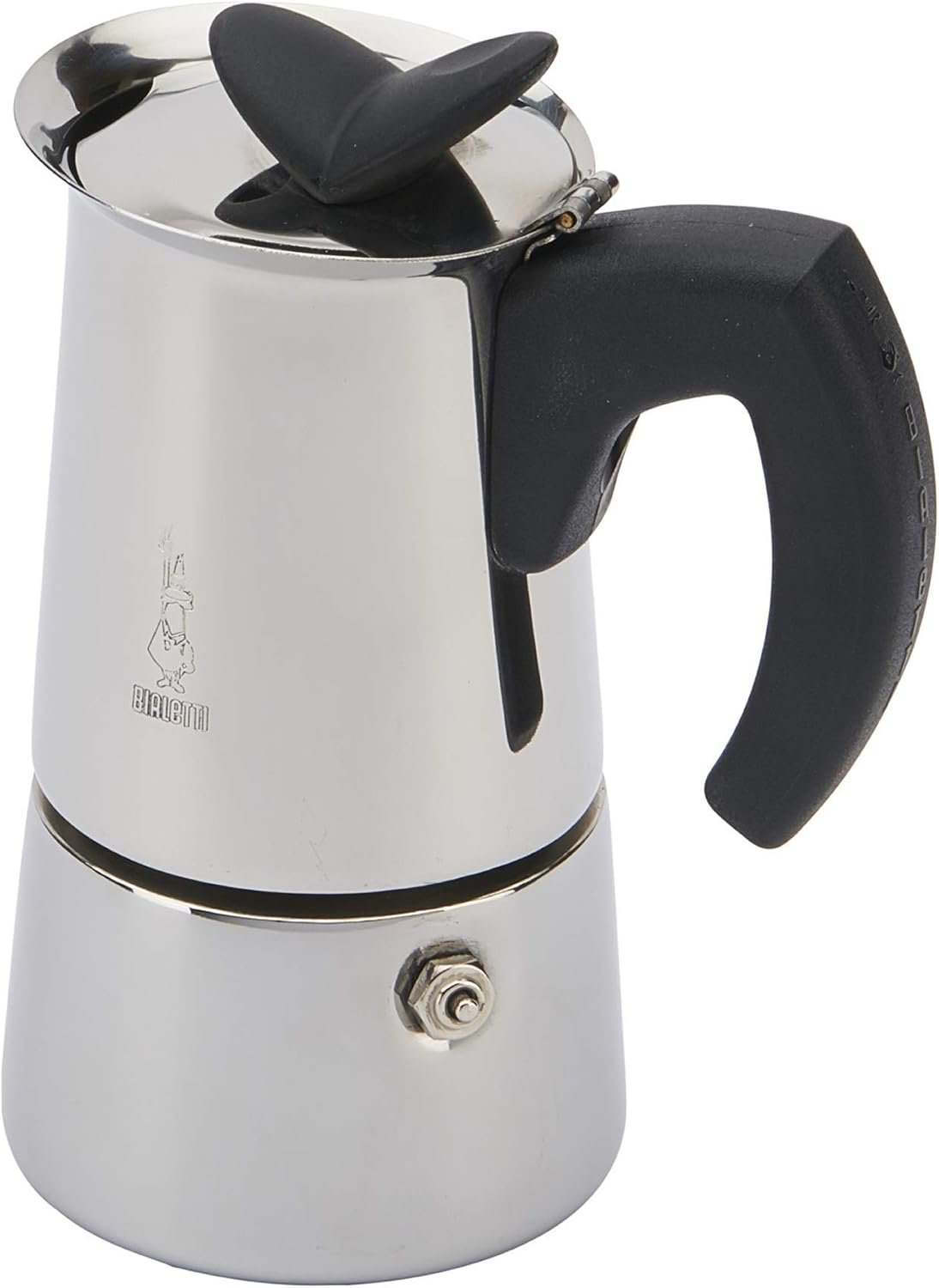
Bialetti Musa: Check Price & Sizes
The Musa is a strong choice for buyers who want a traditional stovetop workflow in a polished stainless steel body. Before ordering, choose the capacity that matches how much moka coffee you normally brew and confirm your induction cooktop’s minimum pan diameter if induction is your primary heat source.
- Stainless steel moka-pot construction
- No electricity or battery required
- Multiple cup sizes depending on current availability
- Suitable for strong moka-style coffee at home or on the road
Amazon availability, size selection, and pricing can change.
Home kitchens, RVs, cabins, compact spaces, and travelers who already have access to a stovetop or camp burner.
Hotels without a kitchen, ultralight backpacking, or anyone expecting café-style espresso from a 9-bar espresso system.
What Is the Bialetti Musa Coffee Maker?
The Bialetti Musa is a stainless steel stovetop moka pot from one of the best-known names in Italian coffee equipment. Like other moka pots, it has three basic sections: a lower water chamber, a funnel-shaped coffee basket, and an upper chamber that collects brewed coffee.
Heat creates pressure in the lower chamber and pushes hot water upward through the coffee bed. The result is a strong, aromatic drink with more concentration than drip coffee but less pressure and a different texture than true espresso.
Bialetti Musa Specifications at a Glance
| Feature | Bialetti Musa | What It Means in Practice |
|---|---|---|
| Material | Polished stainless steel | Durable, corrosion-resistant body with a modern finish. |
| Common sizes | 2, 4, 6 and 10 cup* | Choose by small moka servings, not U.S. 8 oz mugs. |
| Brewing method | Stovetop steam-pressure moka brewing | Strong moka coffee, not pump-driven espresso. |
| Grind | Medium-fine | Finer than drip, but normally coarser than espresso-machine grind. |
| Induction | Stainless steel / induction-capable* | Small pot bases may not trigger every induction hob; verify minimum pan diameter. |
| Replacement parts | Rings, filters and funnels available | Wear components can be replaced instead of discarding the brewer. |
*Size availability varies by market. Induction operation depends on both the pot and the minimum base diameter recognized by the specific cooktop.
Which Bialetti Musa Size Should You Buy?
One of the most common buying mistakes is treating Bialetti “cups” like standard American coffee cups. Moka-pot cup counts refer to much smaller coffee servings. A 6-cup Musa is therefore not designed to fill six large breakfast mugs.
| Size | Good Fit For | Our Practical Take |
|---|---|---|
| 2 cup | One person, small concentrated serving | Compact and easy to store, but check induction-hob minimum diameter before buying for induction use. |
| 4 cup | One large moka drink or two smaller servings | A balanced everyday size for couples or solo drinkers who dilute with water or milk. |
| 6 cup | Two people or multiple small servings | A versatile household size and often easier to pair with standard stovetop burner dimensions. |
| 10 cup | Families, guests, larger batches | Best when you regularly brew for several people; unnecessarily bulky for one small daily serving. |
Because a moka pot is designed around its basket and water chamber, buying a much larger pot and routinely brewing it half-full is not the ideal workflow. Choose the size closest to the amount you normally want to brew.
Design & Build Quality
The Musa’s main selling point is its polished stainless steel construction. It looks more contemporary than the angular aluminum moka-pot silhouette and is a natural fit for buyers who prefer stainless cookware.
Stainless steel also makes sense for a brewer that may move between a home kitchen, RV, cabin, or travel setup. There are few moving parts, no electronics to protect, and key wear items such as the gasket, filter, and funnel can be replaced.
The tradeoff is weight. Stainless steel is not the first choice for someone counting every ounce in a hiking pack. The Musa is better described as portable in the “simple and easy to transport” sense than as an ultralight backpacking brewer.

How Does Bialetti Musa Coffee Taste?
The Musa produces the concentrated profile people expect from moka brewing: heavier and more intense than typical drip coffee, with enough strength to stand up to hot water or milk.
It is important not to judge the Musa as if it were a pump espresso machine. A moka pot does not use the same extraction pressure, portafilter geometry, or brew ratio as café espresso. You can get a rich, satisfying cup, but expecting a conventional espresso shot with the same body and crema structure sets the wrong benchmark.
For many travelers and home users, that difference is actually an advantage. Moka brewing is forgiving in terms of equipment: no battery, no pump, no capsule system, and no separate espresso machine. Fresh coffee, a suitable grind, water, and controlled heat are enough.
Does the Bialetti Musa Work on Induction?
The stainless steel Musa is designed for broad stovetop compatibility, including induction-capable use, but induction compatibility is not only about material. An induction cooktop must also recognize the diameter of the pot’s base.
For gas, keep the flame under the base rather than letting it climb the sides of the pot. For electric, ceramic, and induction, use low to medium heat rather than maximum power. High heat does not make better moka coffee; it makes the brewing process harder to control.
Best Grind Size for Bialetti Musa
Use a medium-fine grind: finer than a typical filter/drip grind but usually coarser than the powdery grind used for many pump espresso machines. Bialetti’s stovetop guidance specifically warns that coffee ground too finely can restrict the system.
Do not tamp the basket. Fill it loosely and level the coffee without compressing it. A moka pot relies on its designed resistance and pressure path; tamping or using excessively fine grounds can interfere with flow.
If your coffee tastes weak, start by moving slightly finer or using fresher beans. If it tastes harsh, burnt, or takes too long to brew, reduce heat and consider moving slightly coarser. Our coffee grinding guide for portable makers explains how grind size changes extraction across travel brewing methods.
How to Use the Bialetti Musa
The Musa is mechanically simple, but technique matters. The goal is controlled brewing—not blasting the pot with maximum heat until it violently sputters.
Depending on pot size and heat intensity, stovetop moka brewing generally takes only a few minutes. If the process is dramatically slower, check your heat level, grind, basket fill, seal, and whether the filter path is clean.
Cleaning & Maintenance
For long-term care, disassemble and hand wash the Musa in warm water, then let the parts dry before reassembly. This also gives you a chance to inspect the gasket, filter plate, and safety valve regularly.
Pay particular attention to three areas:
- Gasket and filter plate: remove trapped coffee grounds and inspect the gasket as it ages.
- Upper column: keep the internal passage free from coffee-oil buildup.
- Safety valve: never allow coffee grounds or scale to obstruct it.
A moka pot is simple equipment, but the seal and pressure path need to stay clean. If steam leaks from the joint or brewing becomes unusually slow, inspect the gasket, funnel rim, threads, and filter before assuming the entire brewer needs replacement.
Bialetti Musa 10 Cup: Who Is the Large Size For?
The `bialetti musa 10 cup` model makes the most sense for households or gatherings where you routinely want a larger batch. Its main advantage is obvious: one brewing cycle can serve several small moka portions instead of repeating the process with a smaller pot.
For one person, however, the 10-cup model can be more brewer than you need. It occupies more space, uses a larger coffee basket, and is less convenient to pack. If your usual routine is one concentrated cup, choose a smaller Musa rather than buying the biggest version just for occasional guests.
The larger base can also be an advantage on induction because induction zones are often less tolerant of very small cookware. Even so, always match the actual pot base to the minimum diameter specified by your cooktop.
Is the Bialetti Musa Good for Travel and Camping?
Yes—with one major condition: you need a safe, compatible heat source. The Musa has no battery and does not heat water by itself. That makes it reliable and easy to store, but less convenient in a hotel room without a kitchenette.
It is a particularly good fit for RV travel, cabins, vacation rentals, car camping, and campsites where you already carry a stove. For backpacking, the stainless body may be heavier than necessary, and a lighter manual brewer may fit better.
If you want espresso-style brewing without a stove, compare the Musa with our best manual portable espresso makers. If you want the machine to heat its own water, see our rechargeable portable espresso machine guide.
Bialetti Musa Pros and Cons
Pros
- Durable stainless steel construction
- No battery, charging cable, pods, or electronics
- Strong, concentrated moka coffee
- Replaceable rings, filters, and funnels available
- Good fit for home kitchens, RVs, cabins, and car camping
- Modern polished design
Cons
- Requires an external stovetop or burner
- Not a true espresso machine
- Heavier than comparable aluminum moka pots
- Small sizes may not activate every induction cooktop
- Less convenient for hotels without kitchen access
- Best results still require grind and heat control
Who Should Buy the Bialetti Musa?
Buy the Musa if:
- You specifically prefer stainless steel over aluminum.
- You enjoy strong moka coffee and understand that it is different from espresso-machine coffee.
- You already have access to a stove, induction hob, RV kitchen, or camp burner.
- You want a brewer with no battery or electronics to maintain.
- You value the availability of replaceable wear parts.
Consider another brewer if:
- You need true espresso-style pressure and a conventional espresso extraction.
- You regularly travel without a safe heat source.
- You need the lightest possible backpacking setup.
- You want one-button heating and brewing.
More Portable Coffee Guides
Bialetti Musa FAQ
Is the Bialetti Musa a real espresso maker?
No. The Musa is a stovetop moka pot. It makes concentrated moka coffee using steam pressure, but it does not use the same pressure, brew ratio, or extraction system as a pump espresso machine.
Does the Bialetti Musa work on induction?
The stainless steel Musa is intended for broad stovetop compatibility, including induction-capable use. However, small moka-pot bases may fall below the minimum pan diameter detected by some induction cooktops, so check your hob manual before buying a small size.
What grind size should I use in a Bialetti Musa?
Use a medium-fine grind that is finer than typical drip coffee but generally coarser than espresso-machine grind. Fill the basket loosely and do not tamp the coffee.
Is the Bialetti Musa dishwasher safe?
For long-term care, we recommend hand washing in warm water following Bialetti’s general guidance for stainless steel stovetop coffee makers. This also makes it easier to inspect the gasket, filter, and safety valve regularly.
Which Bialetti Musa size is best for one person?
A smaller Musa such as the 2- or 4-cup size is usually the most practical starting point for one person, depending on how concentrated you drink your coffee and whether you dilute it with water or milk. Remember that moka “cups” are much smaller than U.S. coffee mugs.
Is the Bialetti Musa good for camping?
It can be excellent for car camping or RV use when you already have a stable, compatible burner. It is less attractive for ultralight backpacking because stainless steel adds weight and the brewer still requires an external heat source.
Is the Bialetti Musa 10 cup too large for one person?
For most solo drinkers, yes. The 10-cup model is better suited to multiple servings or groups. A smaller Musa is easier to store, heats less coffee at once, and better matches a single-person daily routine.
Final Verdict: Is the Bialetti Musa Worth It?
The Bialetti Musa is worth buying for the right coffee drinker. Its appeal is not high-tech convenience or espresso-machine pressure. It is the opposite: a durable stainless steel moka pot with no battery, no proprietary pods, and a brewing method that has very little to go wrong.
Choose it if you want strong moka coffee, prefer stainless steel, and normally have access to a stove or burner. Choose a different portable brewer if you need true espresso pressure, built-in heating, or a setup designed around hotel rooms and flights rather than kitchens and campsites.
Check Bialetti Musa on Amazon